

Buyers · 7 min read
Relocating to Orange County: The Practical Neighborhood Matching Guide
| Paul Phan, Realtor®
Moving to Orange County requires more than just picking a city on a map. This guide breaks down commute corridors, housing styles, and neighborhood vibes to help relocating buyers find their perfect match.
Key Takeaways
- Commute times in Orange County are dictated by freeway and toll road access, not just mileage.
- Irvine and Tustin offer highly structured, master-planned living with premium schools and robust amenities.
- Costa Mesa and Fountain Valley provide coastal proximity and larger lots, typically without HOA restrictions.
- Westminster and Garden Grove are prime locations for cultural dining and ADU-friendly properties.
- Relocating buyers must account for Mello-Roos and HOA fees, which can significantly impact monthly carrying costs.
The Reality of Moving to Orange County in Late 2026
Relocating to Orange County is a dream for many, drawn by the world-class climate, dynamic job market, and distinct coastal-meets-suburban lifestyle. However, for out-of-area buyers looking at a map, the region can look like one continuous sprawl of palm trees and freeways. The reality on the ground is entirely different. Orange County is a patchwork of highly distinct micro-markets, each with its own architectural styles, commute realities, tax structures, and community cultures.
Whether you are moving from out of state for a new role in Irvine's tech sector, migrating south from Los Angeles for better schools, or relocating closer to family in Little Saigon, your home search requires a strategic approach. What works for a remote worker might be a commuting nightmare for someone reporting to a physical office in Santa Ana.
This practical guide is designed to help you navigate the nuances of Orange County real estate, matching your specific lifestyle, budget, and logistical needs to the right neighborhood.
Commute Corridors: Mapping Your Job to Your Home
One of the most common mistakes relocating buyers make is underestimating Southern California traffic patterns. Mileage is a poor indicator of commute time in Orange County; freeway access and toll road proximity are what truly matter.
Orange County is bisected by several major arteries. The I-405 and I-5 freeways are the primary north-south routes, while the 55, 57, and 22 freeways handle east-west and diagonal traffic. For those who prioritize time over toll fees, the Transportation Corridor Agencies (TCA) operate a network of toll roads—the 73, 133, 241, and 261—which can dramatically cut commute times, especially for those living in South County or the eastern foothills.
If you work in the Irvine Spectrum or Newport Center, living in South County (like Lake Forest or Mission Viejo) or coastal-adjacent cities (like Costa Mesa) makes logistical sense. If your job is in Los Angeles County, you will want to anchor your search in North Orange County cities like Fullerton, Buena Park, or Brea to minimize the grueling cross-county commute.
The Master-Planned Hubs: Irvine and Tustin
For buyers seeking predictability, top-tier public schools, and meticulously maintained environments, the master-planned communities of Irvine and Tustin are the gold standard.
Irvine is divided into distinct "villages" (such as Woodbridge, Westpark, Woodbury, and Great Park Neighborhoods). These areas are characterized by robust Homeowner Associations (HOAs), extensive community amenities including resort-style pools and parks, and strict architectural guidelines. Homes here range from dense, newer-construction townhomes to sprawling luxury estates in Shady Canyon or Orchard Hills.
Best for:
Tustin offers a similar master-planned feel in newer developments like Tustin Legacy, but balances it with the historic charm of Old Town Tustin, where you can find tree-lined streets and vintage homes. Tustin often provides a slightly more accessible price point than Irvine while sharing many of the same geographic advantages.
- Tech and medical professionals working locally in Irvine.
- Buyers prioritizing highly rated school districts.
- Those who prefer turnkey neighborhoods with extensive walking trails and parks.
The Cultural Core: Westminster, Garden Grove, and Santa Ana
Orange County is incredibly diverse, and its cultural epicenters offer some of the most dynamic living experiences in the region.
Westminster and Garden Grove are the heart of Little Saigon and the Korean Business District, respectively. These cities are characterized by bustling commercial corridors, incredible culinary scenes, and multigenerational households. The housing stock consists largely of mid-century single-family homes. In recent years, these cities have become hotspots for Accessory Dwelling Unit (ADU) development, making them highly attractive for buyers looking to house aging parents or generate rental income to offset mortgage costs.
Santa Ana, the county seat, offers a blend of historic neighborhoods (like Floral Park and French Park, featuring stunning 1920s architecture) and dense, urban-style lofts near its vibrant downtown. It is undergoing significant revitalization and offers a more urban, walkable lifestyle compared to the rest of the county.
Best for:
- Buyers seeking cultural vibrancy and world-class dining just blocks from home.
- Multigenerational families needing properties with ADU potential.
- Investors and buyers looking for value-add properties in central locations.
North County Character: Fullerton, Orange, and Buena Park
North Orange County feels distinctly different from the master-planned south. Cities like Fullerton, Orange, and Anaheim grew organically over the past century, resulting in neighborhoods with deep historical roots and diverse architecture.
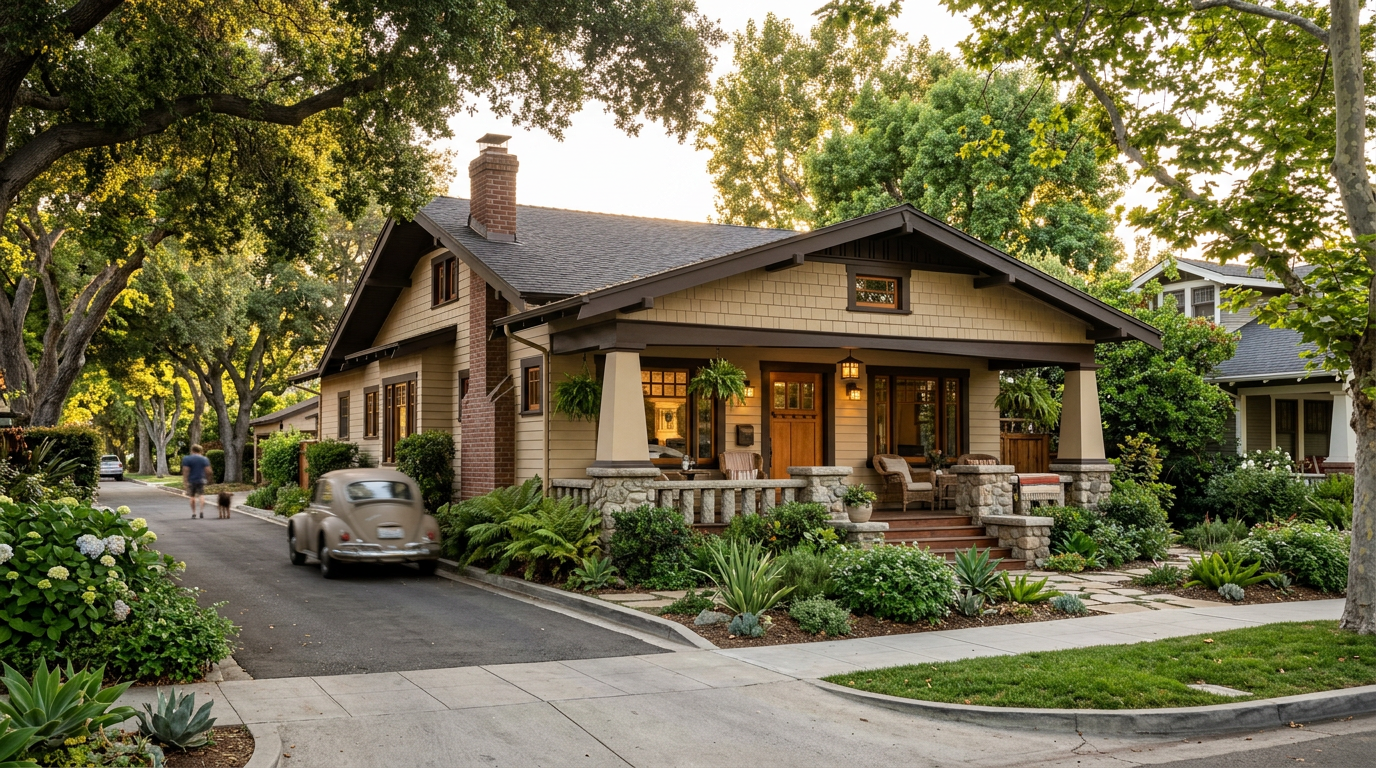
Old Towne Orange is the largest residential historic district in California, filled with meticulously preserved Craftsman bungalows and Victorian homes centered around a vibrant central plaza. Fullerton offers a lively downtown, excellent schools, and unique topography with homes nestled into the Coyote Hills. Buena Park provides a highly central location, excellent freeway access, and a slightly more approachable entry price for first-time buyers relocating to the area.
Best for:
- Commuters who need access to Los Angeles or the Inland Empire.
- Buyers who love historic architecture and walkable, traditional downtowns.
- Those looking for more varied topography and mature, tree-canopied neighborhoods.

The Financial Mechanics: Taxes, Mello-Roos, and HOAs
Relocating buyers—especially those coming from outside California—must understand the unique carrying costs of Orange County real estate.
California's Proposition 13 limits general property taxes to 1% of the assessed value at the time of purchase, with annual increases capped at 2%. However, many newer communities in Orange County (particularly in Irvine, Tustin Legacy, and parts of South County) are subject to Mello-Roos Community Facilities Districts.
Mello-Roos are special tax assessments used to fund local infrastructure like schools, roads, and parks in new developments. These can add hundreds of dollars to your monthly tax bill. When you combine a base property tax, Mello-Roos, and one or more HOA dues (some master-planned communities have a master HOA and a sub-HOA), your monthly carrying costs can be significantly higher than the listing price suggests.
Always ask your real estate professional to pull the specific tax profile for any home you are considering. Note: We are real estate experts, not tax advisors. We strongly recommend consulting with a qualified CPA to understand how California property taxes will impact your specific financial situation.
The Out-of-Area Buyer Strategy
Relocating requires a compressed and highly organized home-search strategy. In the current 2026 market, where inventory remains relatively tight, you cannot always wait until your next weekend trip to view a home.
Successful relocating buyers utilize a hybrid approach. This involves doing heavy preliminary research, utilizing video walkthroughs, and having a trusted local agent act as their eyes and ears on the ground. When a property hits the market that matches your criteria, your agent should be able to tour it immediately, providing unvarnished feedback on the neighborhood, the street noise, and the condition of the home—things a listing video will never show.
Additionally, ensure your financing is completely dialed in before you start writing offers. Local sellers favor buyers who have fully underwritten pre-approvals, ideally from lenders with a strong reputation in the Southern California market.
Making Your Move with Local Expertise
Relocating your life to Orange County is a major undertaking, but with the right guidance, it can be a seamless transition. Understanding the micro-markets, the commute realities, and the true cost of ownership is the key to finding a home you will love for years to come.
At The Maison by Phan Group, we specialize in helping out-of-area buyers navigate the complexities of the Orange County market. Led by Paul Phan, Realtor®, we provide the on-the-ground intelligence and strategic negotiation skills necessary to secure the right property in the right neighborhood.
If you are planning a relocation to Orange County, contact Paul Phan at (714) 717-8088 or email paul@maisonbyphan.com to schedule a comprehensive relocation consultation.
Disclosure
Market information is provided for general education and reflects conditions at the time of writing. It is not legal, tax, or investment advice.
Frequently Asked
What is the difference between North and South Orange County?
North Orange County (like Fullerton, Orange, and Buena Park) features older, historic neighborhoods, organic city layouts, and closer proximity to Los Angeles. South County (like Irvine and beyond) is heavily master-planned, featuring newer construction, strict HOAs, and a more uniform suburban aesthetic.
How much are property taxes in Orange County?
The base property tax rate in California is 1% of the purchase price. However, with local bonds and special assessments (like Mello-Roos in newer communities), the effective tax rate in Orange County typically ranges from 1.05% to 1.8% depending on the specific neighborhood.
Can I buy a house in Orange County while living out of state?
Yes. Many relocating buyers purchase homes remotely. This requires a trusted local Realtor® to conduct live video tours, assess neighborhood nuances, and manage local inspections and escrow logistics on your behalf.
Are there neighborhoods in Orange County without HOAs?
Absolutely. Cities like Fountain Valley, Garden Grove, Westminster, and older parts of Costa Mesa and Orange consist primarily of non-HOA neighborhoods. These areas offer more freedom for exterior modifications, RV parking, and ADU construction.
Talk it through
Have a question about your own situation?
Paul Phan represents buyers and sellers across Orange County — in English and Vietnamese.
(714) 717-8088Continue reading
Buyers
Buying New Construction in North Orange County: Pros, Cons and Negotiation
Purchasing a brand-new home in North Orange County offers modern efficiency and pristine finishes, but the process is vastly different from buying a resale property. Learn how to navigate builder contracts, uncover hidden costs, and negotiate effectively before you step foot in a model home.
Investors
1031 Exchange Strategies: Upgrading Your Orange County Portfolio
Sitting on massive equity but dreading capital gains taxes? Discover how Orange County investors are leveraging the 1031 exchange to upgrade their portfolios and build generational wealth.
Buyers
The California Escrow Process: An Orange County Buyer's 30-Day Roadmap
Entering escrow is the most critical phase of buying an Orange County home. This day-by-day roadmap explains contingencies, deposits, and closing customs.
