
Market · 9 min read
Downtown Huntington Beach & Pier: Coastal Real Estate Guide
| Paul Phan, Realtor®
Living near the Huntington Beach Pier offers unparalleled access to surf culture and coastal amenities, but it comes with unique real estate realities. Discover what buyers need to know about the Downtown grid, parking, and narrow-lot architecture.
Key Takeaways
- Downtown Huntington Beach real estate is defined by 25x115-foot lots, resulting in tall, narrow, three-story custom homes.
- The grid is divided by vibe: lower numbered streets (1st-6th) are vibrant and noisy, while upper streets (11th-17th) are quieter and more residential.
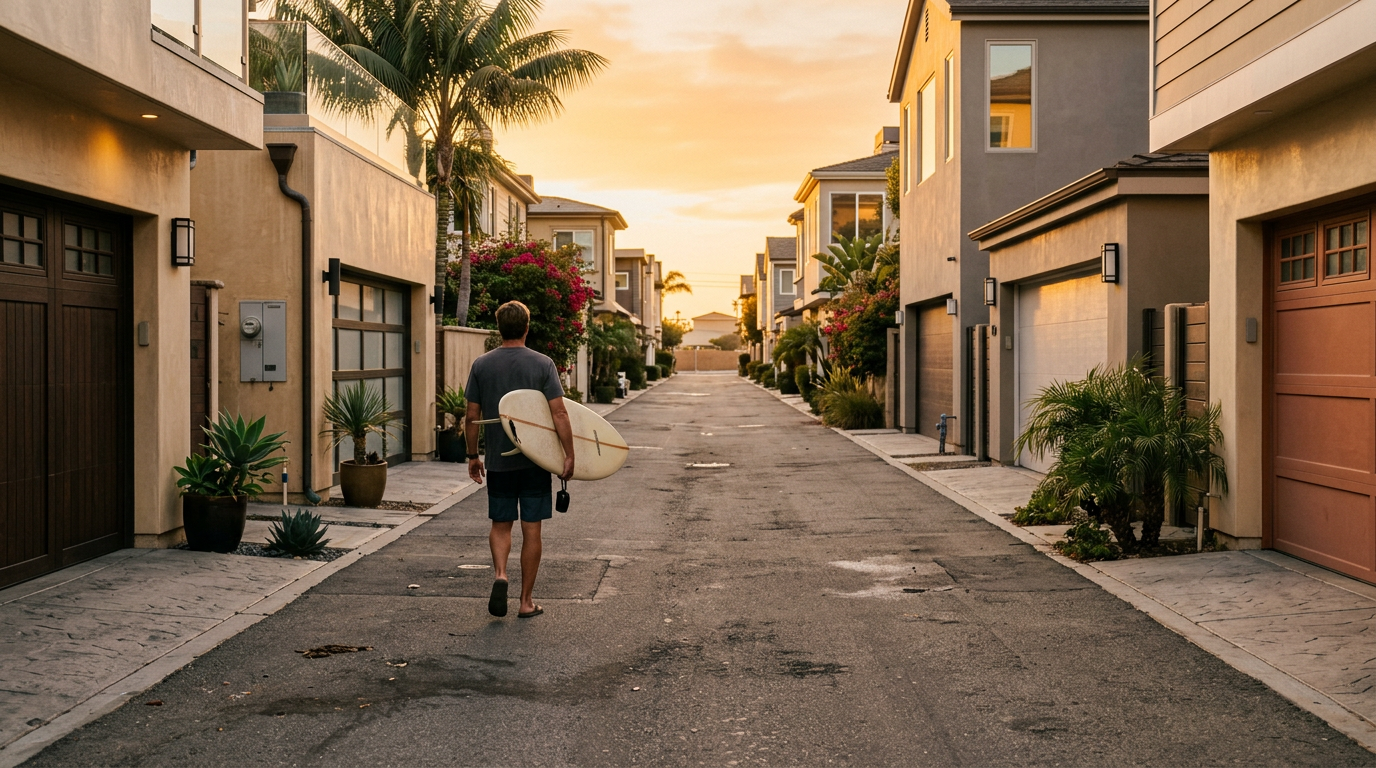
- Parking is a major factor; alley access, garage capacity, and city parking permits are crucial for daily living.
- Huntington Beach strictly regulates short-term rentals, making unhosted vacation rental investments highly restricted in residential zones.
- Pacific City offers an alternative to the historic grid, providing resort-style luxury condos with comprehensive HOA amenities.
- Always verify attendance boundaries directly with the Huntington Beach City and Union High School Districts, as lines can shift.
The Cultural Epicenter of Surf City, USA
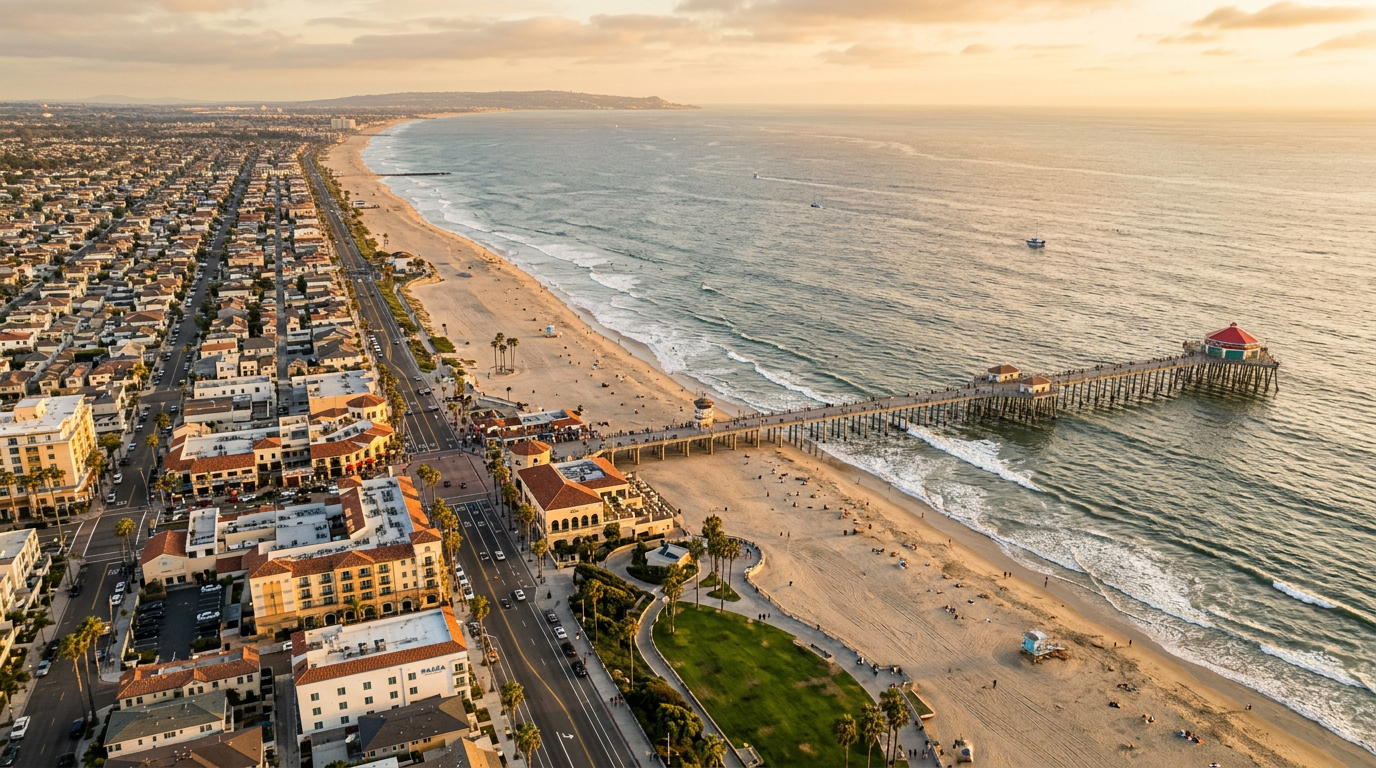
The Huntington Beach Pier is more than just a 1,850-foot concrete span jutting into the Pacific Ocean; it is the beating heart of Orange County's surf culture and the defining landmark of "Surf City, USA." For tourists, it is a destination for weekend strolls, the US Open of Surfing, and sunset photography. But for local residents, the Pier and the adjacent Downtown district represent a highly specific, highly coveted lifestyle.
Owning a home near the Huntington Beach Pier means trading suburban sprawl for a walkable, high-energy coastal grid. Here, daily life revolves around the ocean breeze, the sound of crashing waves, and the vibrant commercial corridor of Main Street. Residents can walk to morning coffee, evening dinners, and some of the most consistent surf breaks in Southern California.
However, buying real estate in the shadow of this iconic landmark requires understanding a unique set of micro-market dynamics. From the architectural constraints of narrow coastal lots to the realities of summer traffic and strict short-term rental regulations, navigating the Downtown Huntington Beach market demands local expertise.
The Downtown Grid: Numbered Streets and Alphabet Avenues
The residential neighborhoods immediately surrounding the Pier are laid out in a distinct grid pattern that heavily influences property values and daily living. Understanding this layout is step one for any prospective buyer.
The grid is defined by two intersecting sets of roads:
Where a home sits on this grid dictates its lifestyle. Homes closer to Main Street (between 1st and 6th Streets) are immersed in the energetic, often noisy hub of downtown nightlife, restaurants, and retail. This area is highly desirable for those who want to be in the center of the action or are looking for a lively second home.
Conversely, as you move north toward 11th through 17th Streets, the neighborhood transitions into a quieter, more residential atmosphere. The tourist foot traffic drops off significantly, making these upper numbered streets highly sought after by full-time residents who want walkability to the beach without the immediate noise of Main Street.
- The Numbered Streets: Running perpendicular to the ocean, starting with 1st Street near the Pier and ascending northward up the coast toward 17th Street and Seapoint Street.
- The Alphabet Avenues: Running parallel to the coast, starting near the sand and moving inland alphabetically: Acacia, Birch, Cedar, Crest, Frankfort, etc.
Architectural Styles and the 25-Foot Lot Reality
The defining characteristic of Downtown Huntington Beach real estate is the lot size. The vast majority of parcels in the downtown grid are historically platted at 25 feet wide by 115 feet deep (approximately 2,875 square feet).
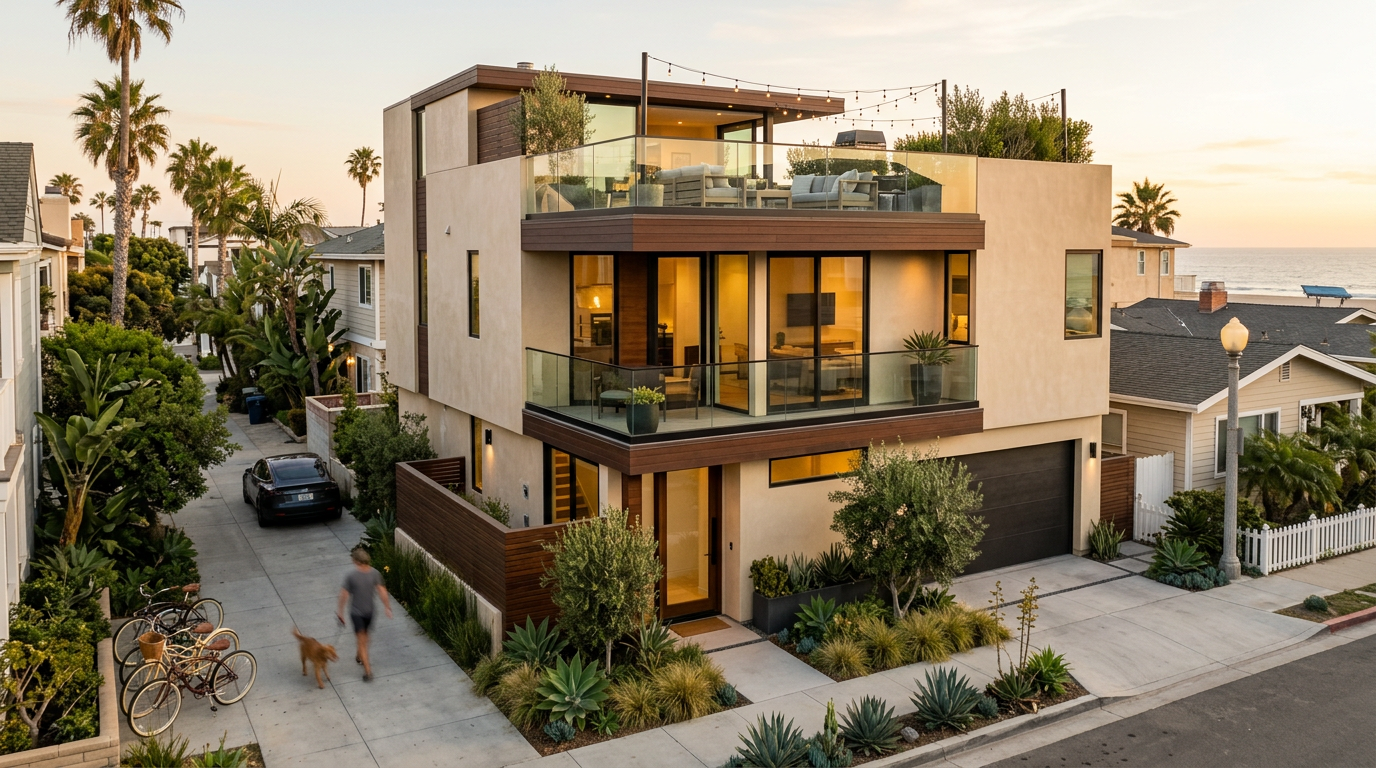
This narrow footprint has forced a very specific evolution in local architecture. Because homes cannot build out, they must build up.
Because of the three-story verticality, many luxury homes in the downtown grid incorporate residential elevators. Price bands in this area are premium. While older attached townhomes or smaller condos further inland on the grid might occasionally surface in the lower luxury tiers, custom single-family homes on the numbered streets typically command multi-million dollar price tags, with values scaling sharply upward for ocean views or proximity to the sand.
- Original Beach Cottages: A dwindling number of original, single-story 1920s and 1930s beach cottages still exist. These are often viewed by investors and builders as prime teardown opportunities or extensive renovation projects.
- 1980s and 1990s Mediterranean: During the coastal building boom of the late 20th century, many lots were redeveloped into two- and three-story Mediterranean-style homes, characterized by stucco exteriors and red tile roofs.
- Modern Coastal Contemporary: Today, new construction is dominated by tall, sleek, three-story custom homes featuring rooftop decks, expansive glass, and seamless indoor-outdoor living spaces.
Pacific City and Luxury Condominium Living
For buyers who want to be near the Pier but prefer a master-planned, resort-style environment over the historic grid, the developments surrounding Pacific City offer a distinct alternative. Located just south of the Pier along PCH, Pacific City is a relatively recent addition to the Huntington Beach coastline, blending an upscale outdoor retail and dining center with luxury residential enclaves.
Properties in this immediate vicinity, such as The Huntington Club, offer high-end condominium and townhome living. These communities often feature guard-gated security, community pools, fitness centers, and direct access to the beach and the Pacific City commercial center.
The trade-off for these amenities is the presence of Homeowners Associations (HOAs). Buyers looking in the Pacific City area must carefully review the HOA dues, which can be substantial, as well as the community rules, reserve funds, and any potential Mello-Roos or special assessments.
Short-Term Rentals and ADU Potential
A common question from buyers looking near the Huntington Beach Pier is whether they can offset their mortgage by renting the property on platforms like Airbnb or VRBO.
The City of Huntington Beach has strict regulations regarding short-term rentals (STRs). Generally, unhosted short-term rentals (where the owner is not present) are heavily restricted or outright banned in most residential zones. Hosted rentals may be permitted but require specific city licenses, inspections, and adherence to strict operational guidelines. Buyers should never purchase a property in Huntington Beach assuming they can operate a short-term rental without first consulting the latest city municipal codes.
Regarding Accessory Dwelling Units (ADUs), the state of California has mandated easier pathways for construction. However, adding an ADU to a 25-foot-wide downtown lot presents significant architectural and logistical challenges. Setback requirements, parking constraints, and utility connections must all be navigated carefully. Always consult with a local architect and the city planning department before assuming a lot can accommodate an ADU.
Commuting and the "Coastal Bubble"
Living by the Pier means living on the very edge of the continent, which naturally impacts commute times. Downtown Huntington Beach is somewhat geographically isolated from Orange County's major freeway arteries.
To reach the I-405 freeway, residents typically must drive 15 to 25 minutes inland via Beach Boulevard, Brookhurst Street, or Goldenwest Street. For those commuting to Irvine, South Coast Metro, or Los Angeles, this daily trek from the "coastal bubble" to the freeway must be factored into the lifestyle equation.
However, for daily logistics, the area is surprisingly self-sufficient. Grocery stores, boutique fitness studios, pharmacies, and medical offices are all located within a short drive or e-bike ride from the downtown grid, meaning residents rarely have to leave the coastal zone for their day-to-day needs.
Schools Serving the Downtown Area
For families moving to the area, the downtown grid is served by the Huntington Beach City School District (HBCSD) for elementary and middle school, and the Huntington Beach Union High School District (HBUHSD) for high school.
Historically, homes in the downtown area have fed into Smith Elementary School and Dwyer Middle School, both of which are deeply embedded in the local community fabric. For high school, the area is traditionally zoned for Huntington Beach High School (HBHS), home of the Oilers. The HBHS campus is a local landmark in its own right, known for its historic auditorium and its unique integration of surf culture into student life, including a highly competitive surf team.
School reputations in this area are generally well-regarded, with active PTA involvement and strong community support. However, school attendance boundaries are subject to change based on enrollment numbers and district realignments. Buyers should never assume a specific address guarantees placement at a specific school. Always verify current boundaries directly with HBCSD and HBUHSD before submitting an offer on a home.
Coastal Maintenance and Upkeep
Finally, owning a landmark property near the ocean requires a commitment to maintenance. The salt air, morning marine layer, and coastal winds are tough on building materials.
Buyers should look closely at the condition of exterior paint, stucco, window seals, and exposed metal. High-quality, marine-grade stainless steel and regular exterior wash-downs are mandatory to prevent premature corrosion. When touring homes, pay attention to the age of the roof and the condition of rooftop decks, as these elements take the brunt of the coastal weather.
Is Downtown Huntington Beach Right for You?
Living near the Huntington Beach Pier is a lifestyle choice. It is for those who want to wake up, grab a surfboard or a leash for the dog, and be on the sand in minutes. It is for those who enjoy the hum of a vibrant downtown, the convenience of walking to dinner, and the status of owning real estate in one of California's most famous coastal towns.
Navigating the nuances of narrow lots, alley access, and coastal zoning requires a seasoned professional. Paul Phan, Realtor® with First Team Real Estate, brings deep local expertise to the Orange County coastal market. Whether you are looking for a custom three-story home on the numbered streets or a luxury condo near Pacific City, The Maison by Phan Group can help you find your place in Surf City, USA.
*(Disclaimer: Real estate regulations, short-term rental rules, and school boundaries are subject to change. Always verify current zoning laws, HOA documents, and school district boundaries independently. For specific legal or tax implications regarding real estate purchases, consult a qualified attorney or CPA.)*
Disclosure
Market information is provided for general education and reflects conditions at the time of writing. It is not legal, tax, or investment advice.
Frequently Asked
Can I buy a home near the Huntington Beach Pier and rent it out on Airbnb?
Generally, no. The City of Huntington Beach heavily restricts unhosted short-term rentals in residential zones. While hosted rentals (where the owner lives on-site) may be possible, they require specific permits, and buyers should consult the city's latest municipal code before purchasing with rental intent.
What is the standard lot size in Downtown Huntington Beach?
The historic standard lot size in the downtown grid is 25 feet wide by 115 feet deep, totaling roughly 2,875 square feet. This narrow footprint is why most newer homes in the area are built vertically, often reaching three stories.
Are there HOAs in Downtown Huntington Beach?
On the traditional numbered and alphabet streets, single-family homes typically do not have HOAs. However, if you purchase in newer developments like those near Pacific City, or in attached townhome/condo communities, you will be subject to HOA rules and monthly dues.
How far is the commute from the Pier to the 405 freeway?
Because Downtown Huntington Beach is located right on the coast, reaching the I-405 freeway usually takes 15 to 25 minutes of driving inland via Beach Boulevard, Brookhurst Street, or Goldenwest Street, depending on daily traffic.
Talk it through
Have a question about your own situation?
Paul Phan represents buyers and sellers across Orange County — in English and Vietnamese.
(714) 717-8088Continue reading
Market
Homes Around Mile Square Park: Fountain Valley Neighborhoods
Mile Square Regional Park is the 607-acre crown jewel of Fountain Valley, offering residents an unparalleled outdoor lifestyle right in their backyards. For homebuyers, navigating the neighborhoods that border this massive green space requires understanding hyper-local traffic patterns, school boundaries, and architectural nuances.
Market
Irvine Unified vs. Tustin Unified: The Real Estate Boundary Guide
In Orange County, an invisible line separates the Irvine and Tustin school districts, often running right through the middle of residential neighborhoods. Understanding how this boundary impacts home prices, property taxes, and daily commutes is essential for buyers navigating the local market.
Market
Huntington Beach High School Boundaries: A Coastal Real Estate Guide
For families moving to Huntington Beach, navigating high school boundaries is just as critical as finding the right coastal home. Discover the neighborhoods, housing styles, and local real estate nuances surrounding the city's major high school campuses.
