
Market · 8 min read
Huntington Beach Pier and the Downtown Grid: Navigating Orange County's Surfing Landmark
| Paul Phan, Realtor®
The Huntington Beach Pier is more than a postcard—it is the anchor of a vibrant, high-density residential grid. Here is what buyers need to know about navigating downtown real estate, from coastal permits to parking realities.
Key Takeaways
- Downtown Huntington Beach lots are typically narrow (25x115 feet), leading to three-story 'tall and skinny' architectural designs.
- Reverse floor plans and rooftop decks are standard features used to maximize ocean views and natural light.
- Renovations and new builds are subject to strict oversight by both the city and the California Coastal Commission.
- Garage space and alley access are critical property features due to intense summer tourism and limited street parking.
- The City of Huntington Beach heavily restricts unhosted short-term rentals in residential zones, impacting investment strategies.
- The downtown grid is divided by Main Street, with numbered streets running perpendicular to the ocean and named 'tree streets' running parallel.
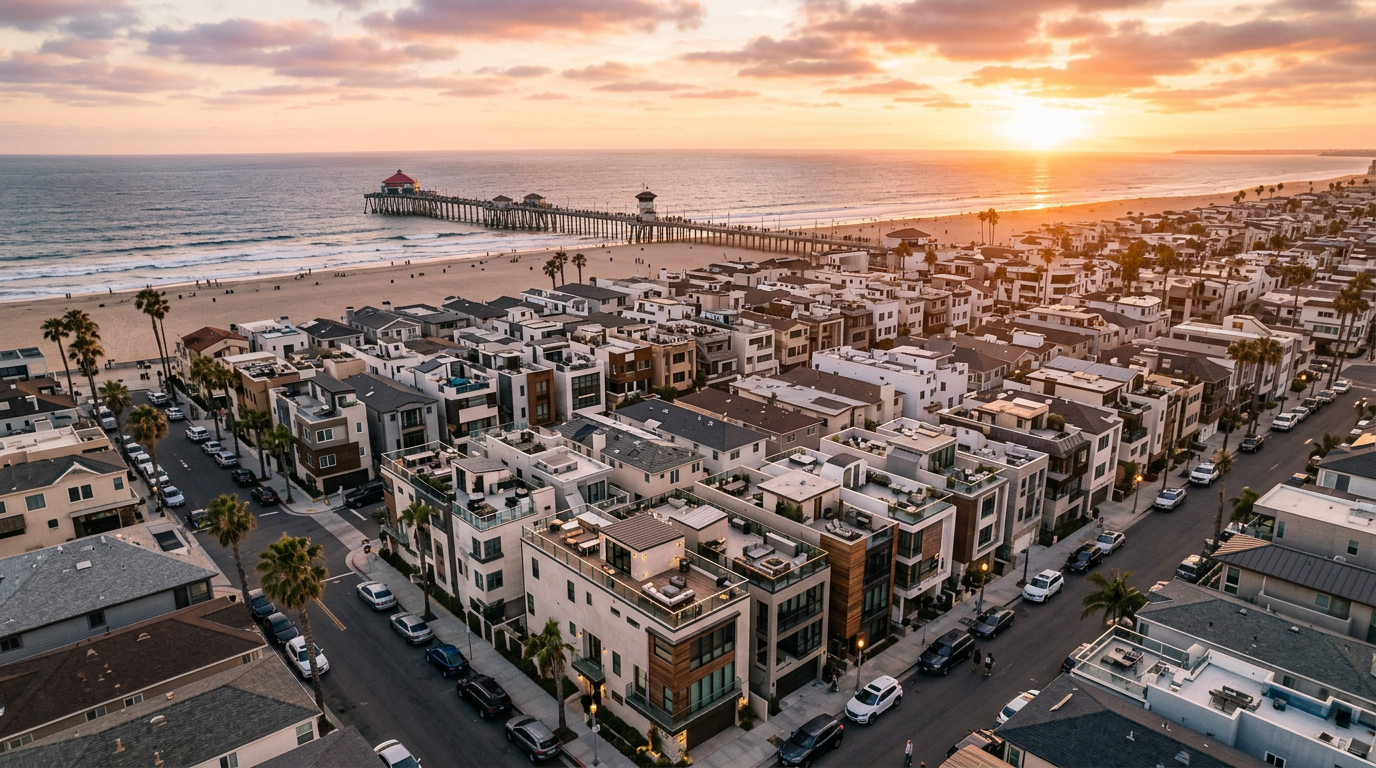
The Huntington Beach Pier stretches 1,850 feet into the Pacific Ocean, serving as the undisputed focal point of Surf City USA. For visitors, it is an iconic Orange County landmark, a place to watch the sunset or grab a meal at the end of the wooden planks. But for the residents who live in the surrounding downtown grid, the pier is the anchor of their daily routine and the defining feature of their local real estate market.
Buying a home near the Huntington Beach Pier means buying into a highly specific coastal lifestyle. It means trading sprawling suburban lots for vertical living, embracing the energy of summer tourism, and navigating the complexities of coastal property ownership. For those who want to walk out their front door, surfboard in hand, and be in the water in five minutes, there is no substitute.
However, the downtown real estate market is layered with nuances. From the architectural evolution of the "tall and skinny" homes to the strict oversight of the California Coastal Commission, buyers must approach this landmark district with their eyes wide open.
The Gravity of the Pier: Daily Life at the Center of Surf City
Living in downtown Huntington Beach fundamentally changes how you interact with your environment. The pier and the adjacent paved beach trail—which stretches uninterrupted down to Newport Beach—serve as the community's primary recreational corridor.
Daily life here is dictated by the ocean. Mornings are characterized by the marine layer, locals walking dogs along the bluff, and surfers checking the breaks on the north and south sides of the pier. On Tuesday evenings, Main Street closes to vehicle traffic for Surf City Nights, a massive street fair and farmers market that transforms the downtown core into a pedestrian promenade.
This walkability is the primary driver of real estate values in the area. Homeowners willingly pay a premium to leave their cars in the garage on weekends, walking to local coffee shops on Olive Avenue, dining on Main Street, or accessing the beach without fighting for a parking spot.
Micro-Neighborhoods: Deciphering the Downtown Grid
The residential streets surrounding the pier are laid out in a dense, highly organized grid. Understanding this grid is the first step in evaluating downtown Huntington Beach real estate, as property values and lifestyle dynamics shift from block to block.
Main Street serves as the commercial spine, dividing the downtown area. The residential grid is defined by two types of streets: those running perpendicular to the ocean, and those running parallel to it.
The Numbered Streets: The streets branching off Pacific Coast Highway (PCH) are numbered. The lower numbered streets (1st, 2nd, 3rd) are located south of Main Street, while the higher numbers (6th through 17th) stretch north toward Dog Beach and the Goldenwest corridor. Homes located on the first few blocks off PCH command the highest premiums, offering the shortest walk to the sand and, in many cases, ocean views from upper levels.
The Named Streets: Running parallel to the ocean are the named streets, which transition from dense commercial zoning near PCH to quieter residential blocks as you move inland. Walnut, Olive, and Orange Avenues are highly sought after by buyers who want downtown proximity without the immediate noise of PCH.
The "Tall and Skinny" Phenomenon: Coastal Architecture
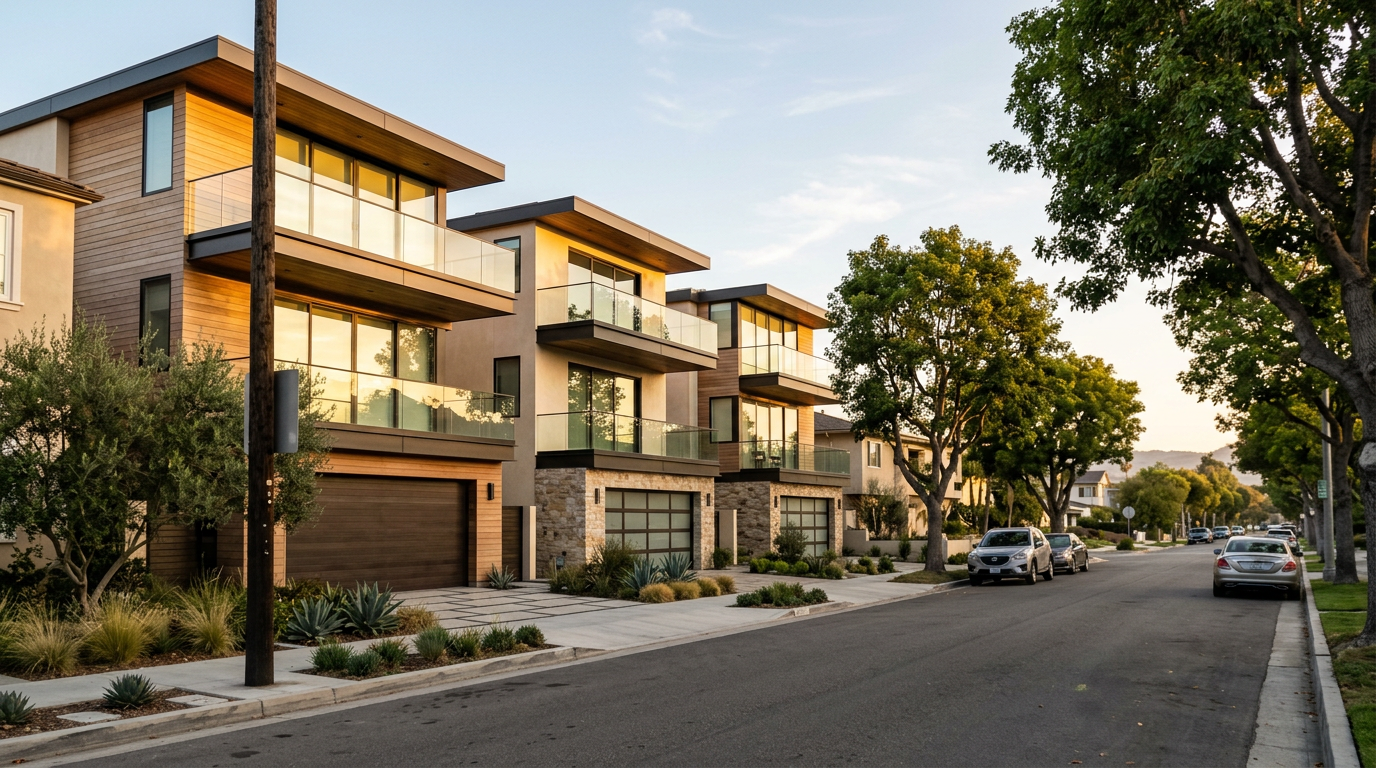
The defining architectural style of downtown Huntington Beach is the "tall and skinny." Because land is at an absolute premium, standard residential lots in the downtown grid are typically narrow—often measuring just 25 feet wide by 115 feet deep (2,875 square feet).
To maximize living space on these compact footprints, builders have historically built vertically. A standard modern downtown home is three stories tall, often encompassing 2,500 to 3,000 square feet of living space.
Buyers exploring these homes will notice a few consistent design trends:
While the original 1920s and 1930s beach cottages still exist, they are increasingly rare, often purchased for land value and redeveloped into modern, multi-story residences.
- Reverse Floor Plans: It is incredibly common for the primary living spaces (kitchen, living room, dining area) to be located on the top floor rather than the ground floor. This design maximizes natural light, captures ocean breezes, and secures ocean views over the rooftops of neighboring homes.
- Rooftop Decks: Outdoor space is rarely found in the form of a traditional backyard. Instead, outdoor living is elevated to rooftop decks, which serve as private entertaining spaces with panoramic views of the pier, the ocean, and the city.
- Elevators: Because multi-story living can be challenging for older residents or those carrying groceries to a top-floor kitchen, residential elevators have become a standard feature in luxury new-builds and extensive remodels.
The Reality of Coastal Renovation: Permits and the Coastal Zone
For buyers looking to purchase an older property near the pier with the intention of remodeling or rebuilding, the regulatory environment is a critical factor. Downtown Huntington Beach sits firmly within the California Coastal Zone.
This means that significant renovations, additions, or teardowns are not just subject to the City of Huntington Beach's building department; they also fall under the jurisdiction of the California Coastal Commission. Obtaining a Coastal Development Permit (CDP) is a rigorous process designed to protect coastal access, viewsheds, and environmental resources.
Buyers must be prepared for strict enforcement of:
Navigating these regulations requires architects and contractors who specialize in Huntington Beach coastal properties.
- Height Limits: The city strictly regulates building heights to prevent the "canyoning" of residential streets and to preserve light and air.
- Setbacks: Even on a 25-foot-wide lot, builders must adhere to side, front, and rear setback requirements, which dictates the maximum width of the actual structure.
- Parking Requirements: The city requires adequate off-street parking for residential builds, which usually means dedicating a significant portion of the ground floor to a two-car (or sometimes three-car) enclosed garage.
Parking, Traffic, and the Summer Surge
Living next to Orange County's most famous surfing landmark requires a tolerance for tourism. Buyers must be realistic about the seasonal rhythms of the city.
From October through May, downtown Huntington Beach feels like a relaxed, localized beach town. However, from Memorial Day to Labor Day, the population swells. The area hosts massive, internationally recognized events that dramatically impact daily life for residents.
The US Open of Surfing in August draws hundreds of thousands of spectators to the pier. The Pacific Airshow in October turns the airspace over the beach into a high-decibel spectacle. The city's 4th of July Parade—the largest west of the Mississippi River—shuts down Main Street and surrounding thoroughfares.
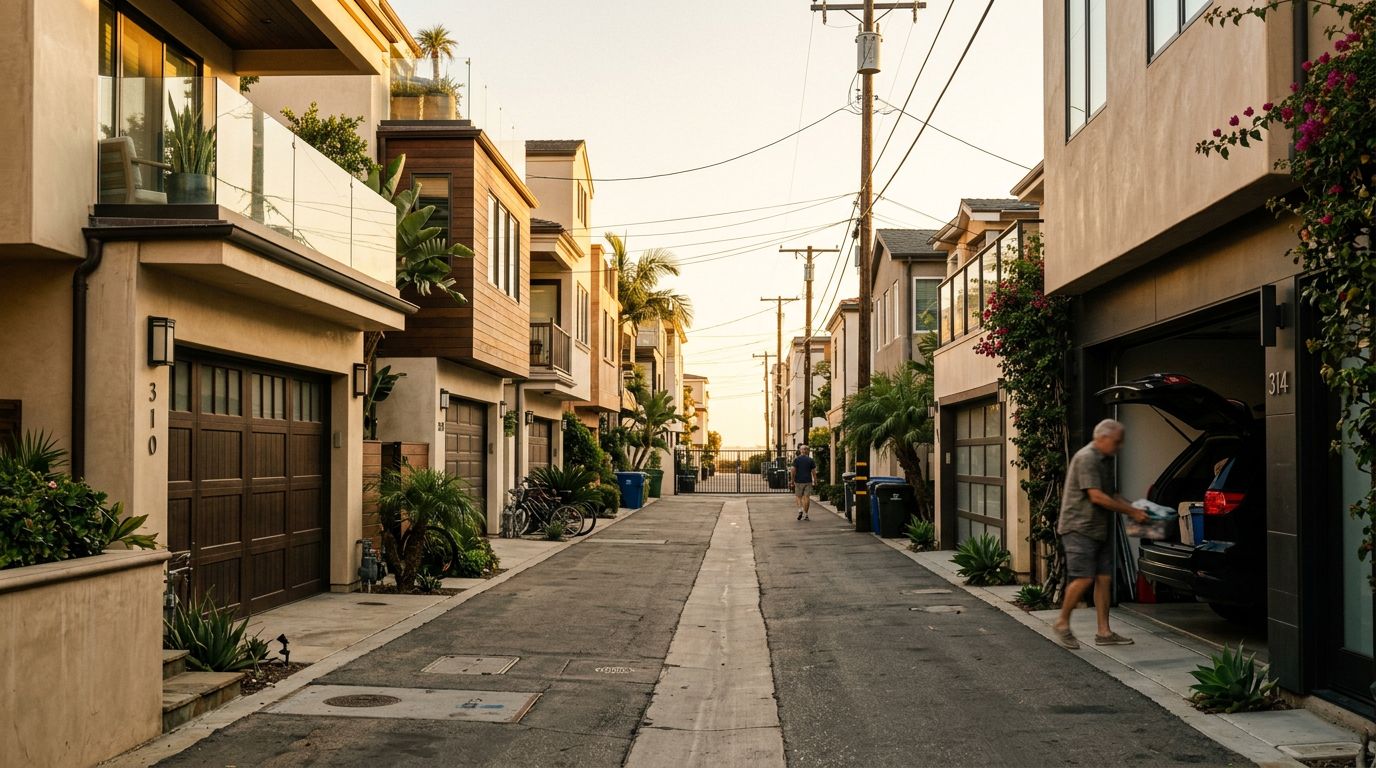
During these peak times, street parking in the downtown grid becomes fiercely competitive. For homebuyers, this makes garage space a non-negotiable asset. Properties with wide alley access and deep garages hold their value exceptionally well, as they allow residents to bypass street parking entirely. When touring homes, buyers should pay close attention to alley widths, the turning radius into the garage, and whether street parking on that specific block is metered or requires a resident permit.
The Investment Angle: Short-Term Rentals
Given the proximity to the pier, many buyers inquire about purchasing downtown properties as short-term rental (STR) investments or part-time vacation homes that can be rented out on platforms like Airbnb or VRBO.
It is vital to understand that the City of Huntington Beach has implemented strict ordinances regarding short-term rentals. Unhosted short-term rentals are heavily restricted in residential zones to preserve neighborhood character and housing stock. The city actively enforces these rules, and fines for illegal STRs are steep.
Buyers relying on short-term rental income to offset their mortgage must consult the latest municipal codes and zoning maps before making an offer. Purchasing a property with the assumption that it can be legally rented out for a weekend is a dangerous and costly mistake in the current regulatory climate.
Schools and Family Life Near the Pier
While the downtown area is famous for its nightlife and surf culture, it is also home to many families. The residential streets are zoned to the Huntington Beach City School District for elementary and middle school, and the Huntington Beach Union High School District for secondary education.
Students living in the downtown grid typically attend Agnes L. Smith Elementary and Ethel Dwyer Middle School, both located within biking distance of the pier neighborhoods. High school students generally attend Huntington Beach High School (HBHS), known for its historic campus on Main Street and its unique integration of surf culture into its athletics programs.
As with all real estate in Orange County, school attendance boundaries are subject to change based on enrollment shifts. Buyers prioritizing specific campuses should never rely on outdated listing information or neighborhood assumptions; always verify current boundary maps directly with the respective school districts before opening escrow.
Disclosure
Market information is provided for general education and reflects conditions at the time of writing. It is not legal, tax, or investment advice.
Frequently Asked
What is a 'tall and skinny' home in Huntington Beach?
A 'tall and skinny' is a local architectural style built on narrow downtown lots, typically measuring 25 feet wide. To maximize square footage, these homes are built three stories high, often featuring reverse floor plans and rooftop decks.
Can I buy a home near the Huntington Beach Pier and use it as an Airbnb?
The City of Huntington Beach has strict ordinances heavily restricting unhosted short-term rentals in residential zones. Buyers must verify current zoning and permit requirements with the city, as illegal short-term rentals face steep fines.
Do I need special permits to remodel a home in downtown Huntington Beach?
Yes. Because the downtown area is located within the California Coastal Zone, significant renovations, additions, or rebuilds typically require a Coastal Development Permit (CDP) and must adhere to strict height and setback regulations.
What are the schools like in downtown Huntington Beach?
The area is served by the Huntington Beach City School District (typically Smith Elementary and Dwyer Middle) and the Huntington Beach Union High School District (HBHS). Buyers should always verify current attendance boundaries directly with the districts.
Talk it through
Have a question about your own situation?
Paul Phan represents buyers and sellers across Orange County — in English and Vietnamese.
(714) 717-8088Continue reading
Market
The Mile Square Park Perimeter: Buying on Fountain Valley's Green Edge
Fountain Valley's 640-acre centerpiece defines the lifestyle and property values of the neighborhoods surrounding it. For homebuyers, living on the perimeter of Mile Square Park offers unparalleled outdoor access, but requires navigating overlapping school districts and weekend traffic patterns.
Market
Irvine Unified vs. Tustin Unified: What the School Line Means for Home Values
In Orange County real estate, a single street can shift your school district and your property value. Here is what buyers need to know when navigating the boundary between Irvine and Tustin.
Market
HB High School Zones: Buying in Coastal Neighborhoods
For families moving to Huntington Beach, navigating the local high school attendance zones is just as critical as choosing the right neighborhood. Here is what homebuyers need to know about housing stock, commutes, and coastal living across Surf City's major high school boundaries.
