
Market · 8 min read
Little Saigon Landmarks: Real Estate Near OC's Cultural Hub
| Paul Phan, Realtor®
Little Saigon is the cultural and commercial heart of the Vietnamese-American community in Orange County. For homebuyers, living near these iconic landmarks offers unparalleled convenience, but requires navigating unique traffic, parking, and zoning realities.
Key Takeaways
- Homes within walking distance of the Asian Garden Mall command a premium due to high demand and multi-generational appeal.
- The surge in Accessory Dwelling Units (ADUs) makes verifying city permits critical for buyers in Westminster and Garden Grove.
- Living near Bolsa Avenue offers incredible convenience but requires buyers to adapt to weekend traffic and parking constraints.
- School boundaries between Westminster School District and Garden Grove Unified are complex and must be verified with the districts.
- Newer mixed-use developments like Bolsa Row are introducing modern, high-density living options to the traditional single-family landscape.
The Cultural Heart of Orange County
To understand the real estate landscape of central Orange County, you must first understand the gravity of Little Saigon. Spanning the borders of Westminster and Garden Grove, with spillover into Fountain Valley and Santa Ana, this district is not merely a neighborhood—it is the largest and most prominent Vietnamese commercial and cultural hub outside of Vietnam.
For Vietnamese-American homebuyers, as well as investors and residents drawn to the area's incredible culinary scene and vibrant community, the landmarks of Little Saigon serve as the ultimate neighborhood anchors. The streets here are defined by their proximity to these cultural touchstones. Buying a home in this area means embracing a lifestyle where multi-generational living, bustling commercial plazas, and deep-rooted heritage intersect daily.
However, living steps away from major cultural landmarks comes with distinct real estate realities. Buyers must weigh the convenience of walking to world-class bakeries and cultural festivals against the realities of weekend gridlock, parking spillover, and the dense, highly competitive housing market that surrounds the Bolsa Avenue corridor.
Asian Garden Mall (Phuoc Loc Tho): The Anchor
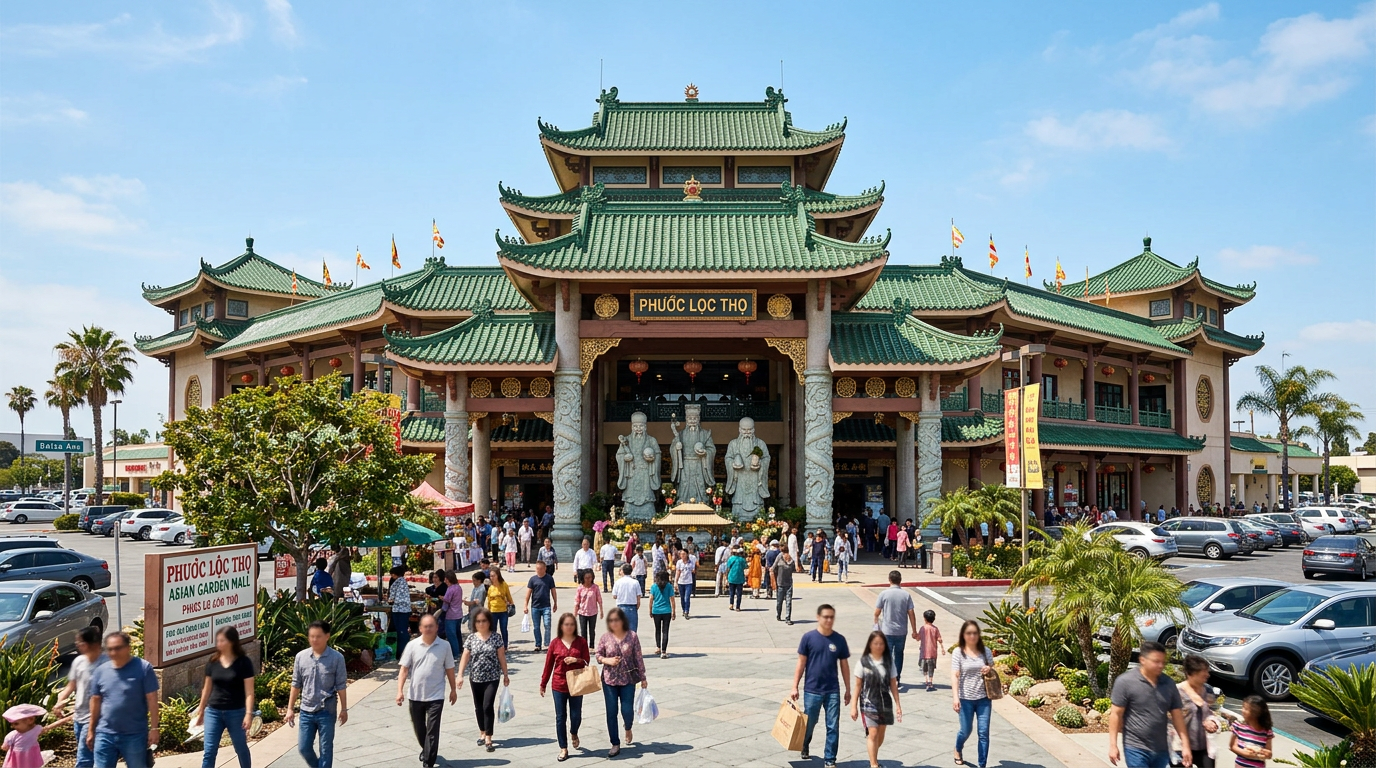
If Little Saigon has a singular, unmistakable epicenter, it is the Asian Garden Mall, known in Vietnamese as Phuoc Loc Tho. Located on Bolsa Avenue between Moran Street and Bushard Street, this two-story indoor shopping center is instantly recognizable by its sweeping green-tile roofs, ornate Chinese-influenced architecture, and the three large statues of the deities Phuc, Loc, and Tho (representing prosperity, status, and longevity) guarding the main entrance.
Built in 1987, the mall is a commercial powerhouse and a cultural gathering place. It houses dozens of jewelry stores, herbalists, apparel shops, and a bustling food court. During the summer months, the front parking lot transforms into the famous Little Saigon Night Market, drawing thousands of visitors for street food and live music.
The Housing Reality Nearby: The residential tracts immediately north and south of Phuoc Loc Tho—particularly along streets like Bishop Place, Bushard Street, and Moran Street—are highly coveted. Homes here are primarily single-story tract houses built in the 1960s and 1970s. Because of the extreme walkability to the mall and surrounding supermarkets, these properties command a premium. Buyers should be prepared for intense competition, as homes within a half-mile radius of the Asian Garden Mall rarely stay on the market long.
However, buyers must also consider the noise and parking constraints. During the summer Night Market or the Lunar New Year (Tet) season, residential streets often experience heavy parking spillover. Homeowners in these immediate tracts frequently rely on their garages and driveways, as street parking becomes scarce.
The Bolsa Avenue Commercial Corridor
While Phuoc Loc Tho is the crown jewel, Bolsa Avenue itself functions as a linear landmark. Stretching roughly from Magnolia Street in the west to Ward Street in the east, this corridor is densely packed with strip malls, each housing beloved pho restaurants, banh mi shops, medical offices, and professional services.
Traffic and Commute Realities: Locals affectionately (and sometimes frustratingly) refer to driving this stretch on weekends as the "Bolsa Crawl." Traffic moves slowly, and navigating the parking lots of popular plazas requires patience. For homebuyers, this means carefully considering your daily commute. If you work in Irvine or Los Angeles, you will likely rely on the 22 or 405 freeways. Living directly off Bolsa Avenue means factoring in an extra ten to fifteen minutes just to navigate the local streets during peak hours.
Many savvy buyers prefer to target homes slightly removed from the immediate corridor—looking instead at neighborhoods near Hazard Avenue to the north or McFadden Avenue to the south. These areas offer a buffer from the commercial noise and traffic while keeping the landmarks of Little Saigon within a five-minute drive.
Moran Street and the Cultural Monuments
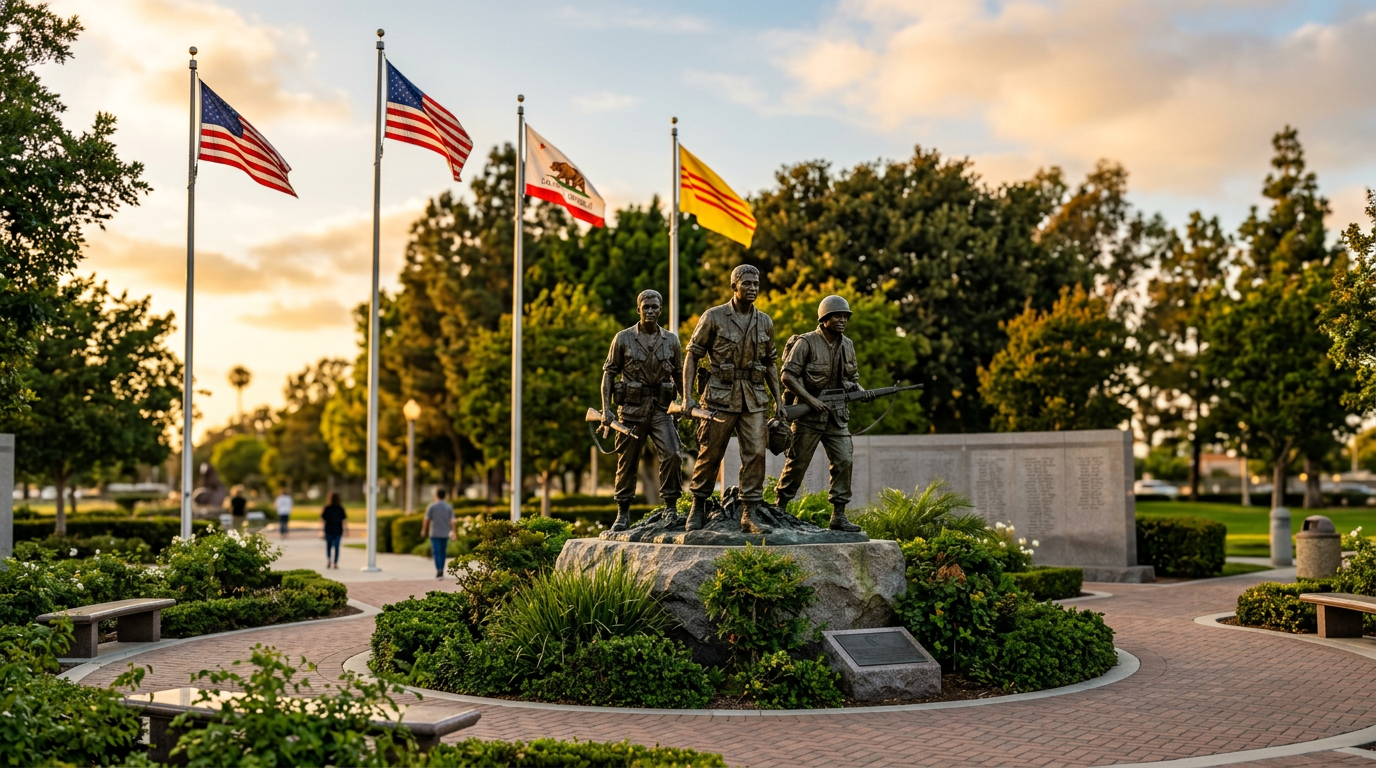
Tucked just behind the bustling commercial plazas is a quieter, more solemn landmark: the Vietnam War Memorial at Sid Goldstein Freedom Park on Monroe Street (just off Moran Street). This memorial, featuring statues of an American and a South Vietnamese soldier standing side-by-side, serves as a poignant reminder of the community's history and resilience.
The area around Moran Street is unique. It serves as a transitional zone between heavy commercial use and residential neighborhoods. During the annual Tet Festival, this area becomes the staging ground for community events, parades, and firecracker ceremonies.
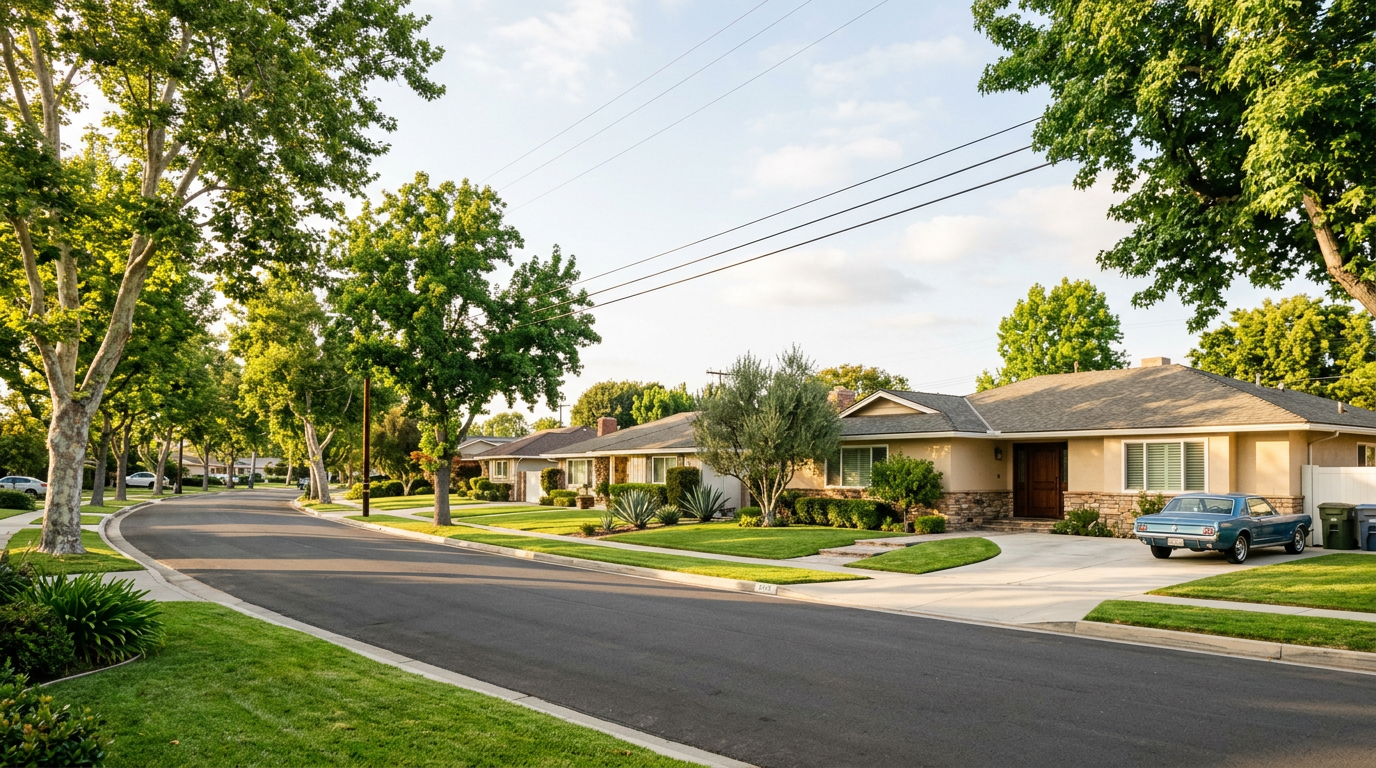
Buying near Freedom Park offers a distinct neighborhood feel. The residential streets here are characterized by mature trees, wider lots (often exceeding 7,000 square feet), and a strong sense of community pride. Many of the homes have been extensively remodeled, with original 1960s floor plans opened up to accommodate modern, multi-generational living.
Housing Stock and the Rise of ADUs
The architectural landscape of the neighborhoods surrounding Little Saigon's landmarks is overwhelmingly defined by mid-century tract homes. Most properties were originally built as three- or four-bedroom, two-bathroom homes spanning 1,200 to 1,600 square feet.
Today, the real estate market here is defined by transformation. Because the cultural pull of Little Saigon is so strong, many families choose to expand their current properties rather than move away. This has led to a massive surge in Accessory Dwelling Units (ADUs).
For Vietnamese-American buyers, ADUs offer the perfect solution for multi-generational living—allowing grandparents to live on the same property while maintaining privacy, or providing rental income to help offset Orange County's high mortgage rates.
When evaluating homes with ADUs or planning to build one, buyers must navigate local zoning laws. Westminster and Garden Grove have distinct permitting processes. Buyers should never assume an existing unpermitted addition can be easily legalized. Always verify permit history with the respective city's building department.
Navigating the nuances of Little Saigon's housing stock requires deep local expertise. Paul Phan, Realtor® and founder of The Maison by Phan Group, frequently advises buyers on evaluating property potential in these highly specific tracts, ensuring that buyers understand both the cultural value and the structural realities of the homes they are purchasing.
School Districts Intersecting the Hub
For families buying near the landmarks of Little Saigon, education is often a primary driver. The district is served by two major public school systems: the Westminster School District (WSD) for elementary and middle schools, and the Garden Grove Unified School District (GGUSD) for high schools, though boundaries can also bleed into the Huntington Beach Union High School District depending on the exact street.
GGUSD, in particular, has a strong reputation within the community, with several high schools frequently recognized for robust Advanced Placement programs and high college matriculation rates.
However, attendance boundaries in this densely populated area can be complex. A home on one side of Brookhurst Street may map to an entirely different high school than a home directly across the street. Buyers must never rely solely on real estate portal data for school assignments. Always verify current attendance boundaries directly with the district offices, as enrollment shifts can alter neighborhood zoning.
Buying Near the Hub: What to Verify
When purchasing a home in the shadow of Little Saigon's landmarks, the standard real estate checklist requires a few local additions.
1. Parking Regulations and Street Sweeping: Because households in this area often have multiple vehicles, street parking is highly competitive. Verify the city's street sweeping schedule and any permit parking requirements on the specific block you are considering.
2. Permit History for Additions: As mentioned, the push for square footage has resulted in many unpermitted enclosed patios, garage conversions, and backyard structures. An unpermitted structure can complicate financing and insurance. Always work with your agent to pull city permits during the escrow period.
3. HOA Realities in Older Complexes: While single-family homes dominate, there are several townhome and condo communities scattered near Brookhurst and McFadden. Many of these were built in the 1970s and 1980s. Buyers must carefully review the Homeowners Association (HOA) financials, looking specifically at reserve funds and any history of special assessments for roof or plumbing repairs.
4. Prop 19 and Inherited Properties: Many homes in Little Saigon have been owned by the same families for decades. As these properties transition to the next generation, buyers and sellers alike must navigate the complexities of Proposition 19, which impacts property tax reassessments. While real estate professionals can guide the transaction, it is crucial to consult a qualified CPA or estate attorney to understand the tax implications of buying a long-held family home or transferring property.
The Future of the District
Little Saigon is not a static monument; it is a rapidly evolving district. Recent years have seen the introduction of new developments, such as the Bolsa Row project at the intersection of Bolsa Avenue and Brookhurst Street. This development blends luxury apartments, a boutique hotel, and upscale retail, signaling a shift toward higher-density, modern urban living within the cultural hub.
These newer developments offer a different style of living—catering to young professionals and empty nesters who want the cultural immersion of Little Saigon without the maintenance of a 60-year-old single-family home. As gentrification and modernization slowly reshape the commercial corridors, the underlying residential real estate will continue to appreciate, driven by the enduring desire to live near the cultural heart of Orange County.
For buyers ready to explore the neighborhoods that define this iconic district, having a guide who understands the streets, the culture, and the market is essential. Reach out to Paul Phan, Realtor® with First Team Real Estate (DRE #02226917), at (714) 717-8088 or paul@maisonbyphan.com to begin your search in Little Saigon.
Disclosure
Market information is provided for general education and reflects conditions at the time of writing. It is not legal, tax, or investment advice.
Frequently Asked
What types of homes are available near the Asian Garden Mall?
The immediate surrounding neighborhoods primarily feature single-story tract homes built in the 1960s and 1970s. Many of these properties have been extensively remodeled and frequently feature Accessory Dwelling Units (ADUs) to accommodate multi-generational living.
Is parking difficult in the residential streets of Little Saigon?
Yes, parking can be highly competitive, especially on weekends, during the summer Night Market, or around the Lunar New Year. Buyers should prioritize properties with ample driveway space and verify local permit parking regulations.
Which school districts serve the Little Saigon area?
The area is primarily served by the Westminster School District for elementary and middle schools, and the Garden Grove Unified School District for high schools. Because boundaries shift, buyers should always verify their specific address with the district offices.
Are there new construction homes in Little Saigon?
While the area is largely built-out with mid-century homes, new mixed-use developments like Bolsa Row are introducing modern apartments and townhome-style living. Additionally, many buyers create 'new' construction by building custom ADUs in spacious backyards.
Talk it through
Have a question about your own situation?
Paul Phan represents buyers and sellers across Orange County — in English and Vietnamese.
(714) 717-8088Continue reading
Market
Homes Around Mile Square Park: Fountain Valley Neighborhoods
Mile Square Regional Park is the 607-acre crown jewel of Fountain Valley, offering residents an unparalleled outdoor lifestyle right in their backyards. For homebuyers, navigating the neighborhoods that border this massive green space requires understanding hyper-local traffic patterns, school boundaries, and architectural nuances.
Market
Irvine Unified vs. Tustin Unified: The Real Estate Boundary Guide
In Orange County, an invisible line separates the Irvine and Tustin school districts, often running right through the middle of residential neighborhoods. Understanding how this boundary impacts home prices, property taxes, and daily commutes is essential for buyers navigating the local market.
Market
Huntington Beach High School Boundaries: A Coastal Real Estate Guide
For families moving to Huntington Beach, navigating high school boundaries is just as critical as finding the right coastal home. Discover the neighborhoods, housing styles, and local real estate nuances surrounding the city's major high school campuses.
