

Market · 8 min read
Fountain Valley Move-Up Market: Why This OC Suburb Holds Its Value
| Paul Phan, Realtor®
Fountain Valley’s strategic location, larger lots, and top-tier schools make it a prime target for Orange County move-up buyers. Here is why this highly retained suburb consistently commands a premium in a low-inventory market.
Key Takeaways
- Fountain Valley's low turnover and high retention rates create consistent inventory scarcity, driving long-term value.
- The Green Valley master-planned community offers premium amenities with significantly lower HOA dues than South County alternatives.
- Top-rated schools in the FVSD and HBUHSD act as powerful valuation anchors and protect home prices during market shifts.
- Standard 6,000+ sq ft lots provide ample space for ADUs and multigenerational living without sacrificing the entire backyard.
- The absence of Mello-Roos taxes makes Fountain Valley's carrying costs highly competitive despite higher purchase prices.
- Move-up buyers must strategically navigate contingent sales using bridge loans or rent-back agreements to compete in a tight market.
The Anatomy of a High-Retention Suburb
If you have driven down the 405 freeway through Central Orange County, you have likely seen the water tower proudly declaring Fountain Valley as "A Nice Place to Live." While the motto is charmingly understated, the real estate market in this 9-square-mile city is anything but simple. Bordered by Huntington Beach to the south and west, Westminster to the north, and Santa Ana and Costa Mesa to the east, Fountain Valley occupies a highly strategic geographic pocket.
For Orange County homeowners looking to step up from their first property—often a condo in South County or a smaller starter home in Garden Grove or Santa Ana—Fountain Valley represents the quintessential move-up destination. In late 2026, the city's housing market is defined by incredibly low turnover. When families buy here, they tend to stay for decades. This high retention rate creates a perpetual scarcity of inventory, which is the primary engine driving Fountain Valley home values.
Understanding why this specific pocket holds its price requires looking beyond the broad Orange County market averages. It comes down to a unique combination of 1960s and 1970s tract architecture, highly rated school districts, the absence of Mello-Roos taxes, and a community layout anchored by one of the largest regional parks in Southern California. For move-up buyers working with Paul Phan and The Maison by Phan Group, mastering these local nuances is the first step to successfully securing a home here.
The Move-Up Math: From Starter to Forever Home
Moving up in Orange County is an exercise in equity management. In recent months, standard single-family homes in Fountain Valley have typically traded in the $1.2 million to $1.8 million range, heavily dependent on square footage, lot location, and the extent of interior renovations.
For a move-up buyer, the transition usually involves selling a starter property that has accrued significant equity over the last five to ten years. For example, selling a $900,000 townhome or a $1.1 million entry-level single-family home in a neighboring city provides the down payment power necessary to absorb the higher purchase price in Fountain Valley.
However, buyers must account for the reality of 2026 interest rates and property tax reassessments. Because Fountain Valley homes are older, many current sellers have incredibly low property tax bases. When you purchase the home, the county will reassess the property at the current purchase price. Buyers must run the carrying cost math carefully, factoring in the new property tax bill, which will sit at roughly 1.1% to 1.2% of the purchase price, plus standard insurance and utility costs.
S&S Construction and the Architectural Baseline
Much of Fountain Valley’s housing stock was built by S&S Construction (now Shapeell Industries), a developer renowned in Orange County for delivering solid bones and highly functional floor plans. If you tour a home in the popular Park Place or Fountain Valley Estates tracts, you are likely walking through an S&S build.
These homes typically feature wide hallways, formal dining rooms, and generous primary suites. In 2026, the trend among move-up buyers is not to tear these homes down, but to execute heavy cosmetic renovations. The structural integrity of these 1970s homes makes them ideal canvases for open-concept remodels.
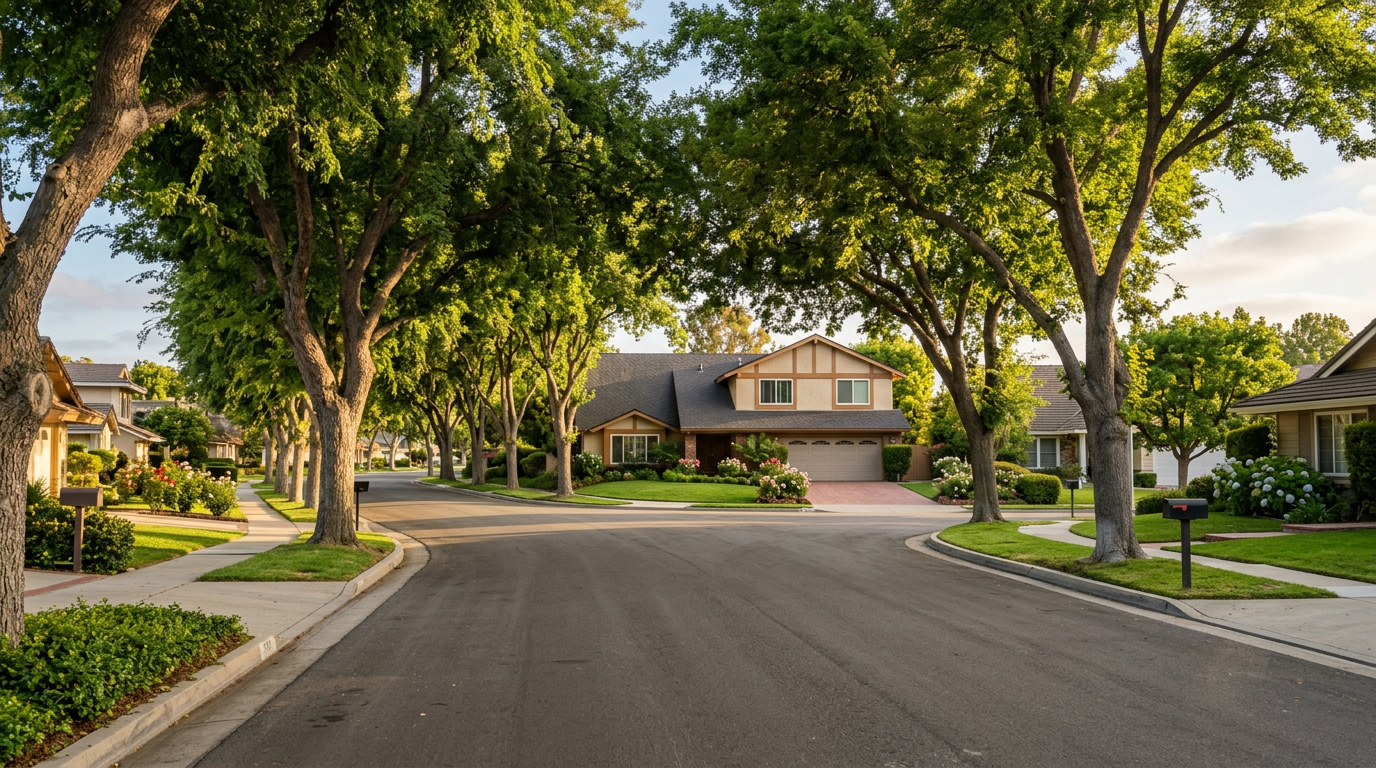
Additionally, Fountain Valley is known for its wide, sweeping residential streets and buried utility lines in many neighborhoods. This lack of overhead wires contributes significantly to the curb appeal and neighborhood character, subtly reinforcing property values when compared to older, neighboring tracts in Santa Ana or Westminster.
Schools as a Valuation Anchor
The most frequently cited reason move-up buyers target Fountain Valley is the public school system. The city is served primarily by the Fountain Valley School District (FVSD) for elementary and middle school, and the Huntington Beach Union High School District (HBUHSD) for high school.
Schools like Courreges Elementary, Masuda Middle School, and Fountain Valley High School consistently draw families from across the county. In the real estate market, school boundaries act as invisible valuation lines. Homes located within the boundaries of the most highly sought-after elementary schools often see shorter days on market and receive multiple offers, even in slower economic quarters.
For buyers without children, purchasing in a top-tier school district might seem like an unnecessary premium. However, from an investment perspective, these schools act as a powerful hedge against market downturns. When housing inventory rises and demand softens, homes in premium school districts are historically the last to see price reductions and the first to recover.
Mile Square Park and the Geography of Value
Fountain Valley’s geography is anchored by Mile Square Regional Park, a massive 600-acre green space that essentially occupies a full square mile of the city. Featuring two golf courses, lakes, archery ranges, and extensive walking trails, the park is the recreational heart of the community.
Proximity to Mile Square Park heavily influences home values. Neighborhoods bordering the park—particularly along Ward Street, Edinger Avenue, and Heil Avenue—often command higher prices due to the immediate access to recreation.
The city’s commercial geography also plays a role. The northern edge of Fountain Valley blends seamlessly into the vibrant cultural and culinary hub of Little Saigon, centered around the Brookhurst Street corridor. Meanwhile, the southern edge near Garfield Avenue and Ellis Avenue offers rapid access to the beaches of Huntington Beach. Move-up buyers must decide whether they prioritize walkability to world-class dining in the north or ocean breezes in the south.
Lot Sizes, ADUs, and the Remodel Culture
One of the most significant advantages Fountain Valley holds over newer construction in Irvine or Tustin is lot size. Standard residential lots in Fountain Valley typically range from 6,000 to 7,500 square feet, with many cul-de-sac lots pushing past 8,000 square feet.
In 2026, this land has incredible intrinsic value. The State of California and the City of Fountain Valley have streamlined the process for building Accessory Dwelling Units (ADUs). Because Fountain Valley homes have generous setbacks and deep backyards, homeowners can frequently add a 500- to 800-square-foot ADU without entirely sacrificing their outdoor living space.
For move-up buyers, this presents a unique opportunity for multigenerational living. A family can purchase a four-bedroom home for themselves and build a detached ADU for aging parents, keeping the family together while maintaining privacy. Alternatively, the ADU can serve as a rental unit to offset the higher mortgage costs associated with moving up.

Property Taxes and the Absence of Mello-Roos
When calculating the true cost of ownership, Fountain Valley offers a massive structural advantage: the near-total absence of Mello-Roos.
Mello-Roos are special tax assessments used to fund infrastructure (schools, roads, parks) in newly developed communities. In South Orange County, these assessments can add hundreds of dollars a month to a homeowner's tax bill, sometimes pushing the effective property tax rate to 1.7% or 1.8%.
Because Fountain Valley’s infrastructure was established decades ago, homeowners here generally pay the standard base property tax rate of roughly 1.1% to 1.2%. Over a 10-year holding period, the absence of Mello-Roos can save a move-up buyer tens of thousands of dollars, making a slightly higher purchase price in Fountain Valley more affordable month-to-month than a cheaper home in a heavily taxed South County tract.
*(Note: Property taxes are complex, and initiatives like Proposition 19 can significantly alter tax bases for buyers over 55. Always consult a qualified CPA or tax attorney to understand your specific tax liabilities before purchasing real estate.)*
Structuring the Contingent Move-Up Purchase
The greatest hurdle for the move-up buyer is logistics: how do you buy your Fountain Valley dream home before you have sold your starter home? In a competitive, low-inventory market, sellers are often hesitant to accept offers contingent on the sale of another property.
To compete, buyers must utilize advanced financing and negotiation strategies. This may involve securing a bridge loan, utilizing a home equity line of credit (HELOC) on the current property to fund the down payment, or negotiating a long rent-back agreement. A rent-back allows you to sell your current home, secure the cash, and rent the home back from the new buyer for 30 to 60 days while you shop aggressively in Fountain Valley as a non-contingent buyer.
Partnering with Local Expertise
Navigating the Fountain Valley move-up market requires more than just browsing listings; it requires a deep understanding of tract boundaries, school zones, floor plan expansion potential, and strategic offer structuring.
Paul Phan, Realtor® and the team at The Maison by Phan Group specialize in guiding Orange County homeowners through the complex process of selling their starter properties and securing their long-term family homes. Whether you are targeting the tree-lined streets of Green Valley or seeking a large lot near Mile Square Park, having a localized strategy is your strongest asset.
To discuss the current value of your home and explore your move-up purchasing power in Fountain Valley, contact Paul Phan at (714) 717-8088 or email paul@maisonbyphan.com.
Disclosure
Market information is provided for general education and reflects conditions at the time of writing. It is not legal, tax, or investment advice.
Frequently Asked
Are there Mello-Roos taxes in Fountain Valley?
Generally, no. Because Fountain Valley was largely developed in the 1960s and 1970s, its infrastructure was funded before the Mello-Roos Community Facilities Act of 1982. Homeowners typically only pay the base property tax rate of roughly 1.1% to 1.2%.
Can I build an ADU on my Fountain Valley property?
Yes. The City of Fountain Valley complies with California state laws encouraging Accessory Dwelling Units. Given the generous 6,000 to 7,500 square foot lot sizes typical in the city, many homeowners successfully permit and build detached or attached ADUs.
What makes the Green Valley neighborhood so desirable?
Green Valley is a master-planned tract featuring mature tree canopies, 21 acres of private parks, and three community pools. Its pedestrian-friendly layout allows children to walk to school safely, and its HOA dues are historically very low compared to modern planned communities.
How do I buy a home in Fountain Valley if I need to sell my current home first?
In a competitive market, contingent offers can be difficult to get accepted. Move-up buyers often use strategies like bridge loans, HELOCs for the down payment, or selling their current home with a 30- to 60-day rent-back agreement so they can shop as non-contingent buyers.
Talk it through
Have a question about your own situation?
Paul Phan represents buyers and sellers across Orange County — in English and Vietnamese.
(714) 717-8088Continue reading
Investors
The Orange County Rental Market: Should You Sell or Keep and Rent?
Record-low mortgage rates have turned many Orange County homeowners into accidental landlords. But does keeping your property as a rental actually make financial sense in 2026?
Market
Irvine vs. Tustin: Schools, HOAs, and Long-Term Value in 2026
Choosing between Irvine and Tustin requires looking past the purchase price. We break down the true carrying costs, school district nuances, and long-term appreciation trends for Orange County families.
Buyers
The Vietnamese-American Guide to Multigenerational Homebuying in OC
For many Vietnamese-American families in Orange County, multigenerational living is both a cultural cornerstone and a strategic financial move. Discover how to navigate floor plans, ADUs, and joint financing to secure a home that comfortably houses every generation.
