
Market · 8 min read
Great Park Irvine: Parks, Schools, and Neighborhood Realities
| Paul Phan, Realtor®
Irvine’s Great Park has transformed from a military base into Orange County's most ambitious master-planned community. For homebuyers, navigating its micro-neighborhoods means understanding unique school boundaries, dense housing styles, and the realities of living next to a regional landmark.
Key Takeaways
- Great Park Neighborhoods are divided into distinct micro-collections, each with its own architectural style and community amenities.
- Irvine Unified built specific K-8 campuses and Portola High School within the park, though attendance boundaries are subject to change.
- Housing density is high, with a heavy prevalence of three-story townhomes and zero-lot-line detached condos.
- Residents enjoy world-class private amenities but must navigate weekend traffic from the adjacent regional sports complexes.
- Holding costs are significant, with buyers needing to account for high Mello-Roos taxes and multiple HOA dues.
The Vision and Geography of Great Park
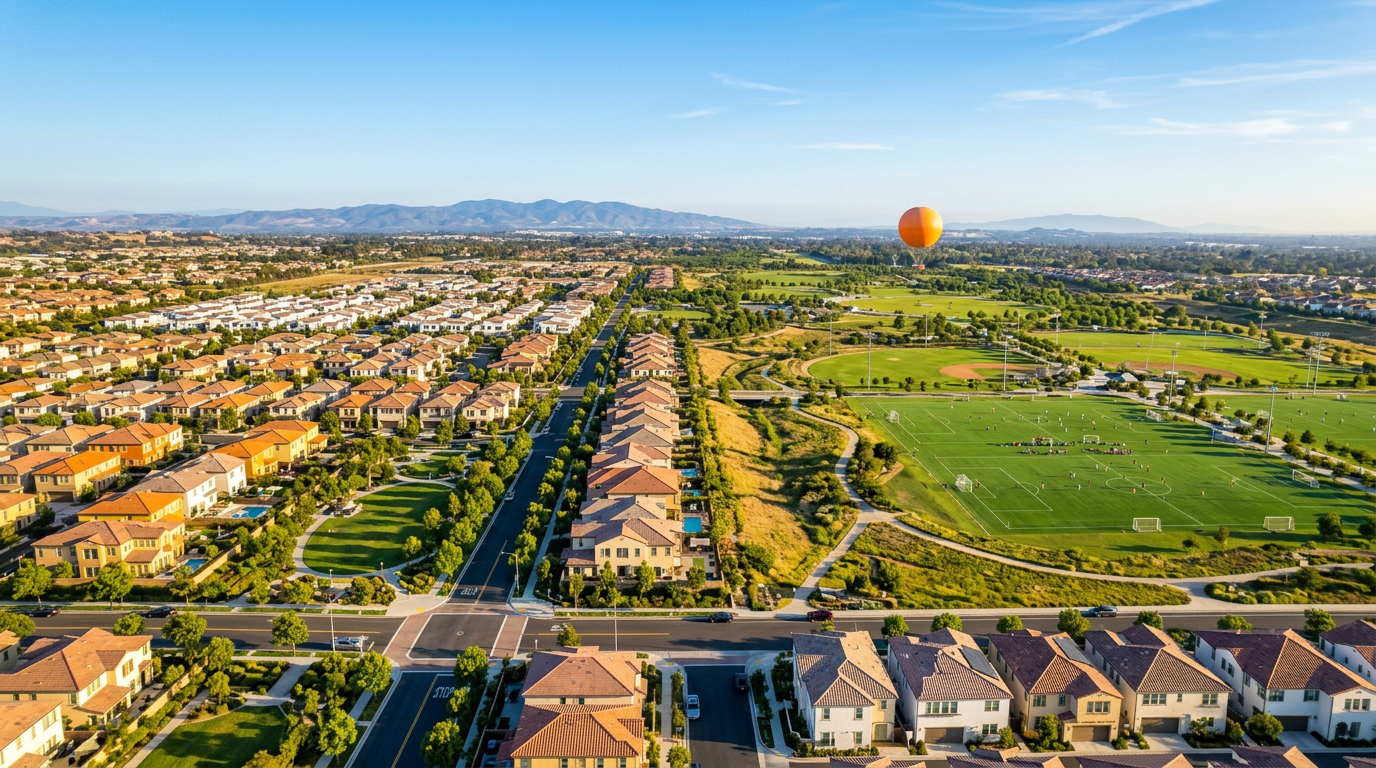
Rising from the footprint of the former El Toro Marine Corps Air Station, the Great Park in Irvine is not just a public amenity; it is the center of gravity for Orange County’s most significant residential expansion of the 21st century. Bounded roughly by the 133 toll road to the west, the 5 freeway to the south, and the foothills of the Santa Ana Mountains to the north and east, this massive master-planned project intertwines regional parkland with high-density, modern residential tracts.
For homebuyers, "The Great Park" means two different things. First, there is the park itself—a sprawling, evolving municipal project managed by the City of Irvine that includes sports complexes, an ice arena, and future botanical gardens. Second, there are the "Great Park Neighborhoods," the privately developed residential villages built around the park's perimeter.
Understanding how these two entities interact is crucial for anyone looking to buy a home here. Living in the Great Park Neighborhoods means embracing a highly amenitized, walkable, and community-oriented lifestyle, but it also means navigating the traffic of a regional destination, paying premium holding costs, and adapting to the realities of modern, high-density residential architecture.
The Micro-Neighborhoods: From Beacon to Solis
Unlike traditional Irvine villages that were built out over a decade with a relatively uniform aesthetic, the Great Park Neighborhoods are divided into distinct collections, each anchored by its own namesake park and community center. These micro-neighborhoods were phased in over several years, meaning each has a slightly different architectural flavor, density level, and maturity.
- Pavilion Park: The first of the neighborhoods, featuring more traditional Irvine architecture, larger lots, and mature heritage trees salvaged from the original military base.
- Beacon Park: Anchored by a massive treehouse and community pool, this neighborhood introduced more transitional and modern architectural styles, blending attached townhomes with large single-family residences.
- Parasol Park: Known for its urban, high-density feel, this collection leans heavily into three-story townhomes, detached condos, and a central park featuring a community greenhouse and modern playgrounds.
- Cadence Park: Designed with an arts and music theme, this neighborhood features an amphitheater, art installations, and a mix of dense, multi-level living spaces.
- Novel Park: A smaller, highly walkable enclave featuring a quirky, coffee-shop-style community center and a mix of attached and detached homes aimed at young professionals and smaller households.
- Solis Park & Luna Park: The newer additions to the master plan, featuring expansive pool complexes, modern California styling, and homes designed heavily around multi-generational living.
Irvine Unified Schools Within the Park
For many buyers, the primary draw of the Great Park Neighborhoods is the Irvine Unified School District (IUSD). Rather than bussing students to existing Irvine campuses, IUSD and the developers collaborated to build brand-new schools directly within the master-planned communities.
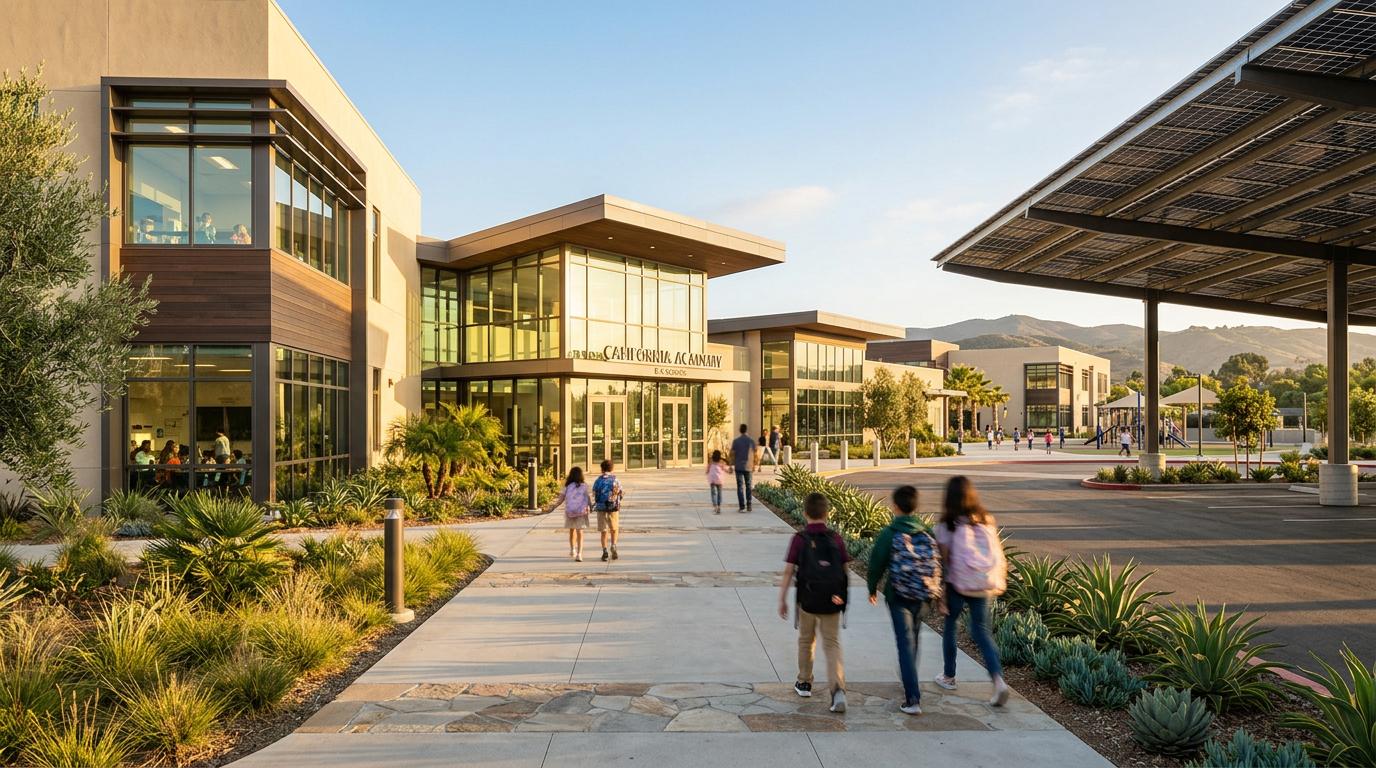
Unique to this area is IUSD’s heavy reliance on the K-8 model. Campuses like Beacon Park K-8, Cadence Park K-8, and Solis Park K-8 were designed to keep students in the same community environment from kindergarten through middle school. These campuses feature state-of-the-art technology, flexible learning spaces, and modern security designs. Because they are embedded directly into the neighborhoods, the morning commute for many families consists of a short walk or bike ride along dedicated community trails.
Older students typically feed into Portola High School, located on the eastern edge of the Great Park. Opened in recent years, Portola High resembles a small college campus more than a traditional high school, boasting an aquatics center, a performing arts building, and advanced science labs.
However, buyers must approach school boundaries with caution. Because the Great Park is still growing, IUSD frequently reviews and adjusts attendance boundaries to balance enrollment across its K-8 campuses. A home that is currently zoned for Cadence Park K-8 could potentially be rezoned in the future. Homebuyers should never rely on third-party listing sites for school assignments; always verify the current and projected attendance boundaries directly through the Irvine Unified School District website.
The Reality of Great Park Amenities
Living in the Great Park Neighborhoods means having access to an unprecedented level of local amenities, but it also means sharing your backyard with the rest of Southern California.
Residents enjoy exclusive access to the private neighborhood parks, pools, clubhouses, and connecting trails that weave the collections together. These private spaces are maintained by the master homeowners association and are generally restricted to residents and their guests.
However, the public Great Park—which sits adjacent to these homes—is a massive regional draw. The Great Park Sports Complex features hundreds of acres of soccer fields, baseball diamonds, tennis courts, and volleyball courts. On any given weekend, thousands of families from across the state descend on the park for club sports tournaments.
Additionally, the park is home to Great Park Ice & FivePoint Arena (the practice facility for the Anaheim Ducks), the Wild Rivers water park, and the iconic Great Park Balloon. For residents, this means world-class entertainment and recreation are just a walk away. The trade-off is the inevitable increase in noise, ambient light from the sports fields, and significant weekend traffic.
Commutes, Traffic, and the Irvine Grid
Navigating the Great Park requires an understanding of Irvine's arterial grid. The primary ingress and egress routes for the neighborhoods are Irvine Boulevard to the north, Trabuco Road to the south, and Sand Canyon Avenue to the west.
During standard weekday commuting hours, residents generally have smooth access to the 133 toll road, which quickly connects to the 5 and 405 freeways, or drops south toward Laguna Beach. Irvine Boulevard serves as a wide, efficient corridor moving east to west.
However, buyers must account for the "tournament effect." On Saturdays and Sundays, traffic along Great Park Boulevard and Marine Way can back up significantly as tournament-goers arrive and depart. For residents living in the neighborhoods closest to the sports complex, such as Parasol Park or parts of Cadence Park, learning the back routes and timing errands around tournament schedules becomes a necessary part of daily life.
Home Styles, Density, and the "Detached Condo"
Buyers entering the Great Park real estate market are often surprised by the density. Because land in Irvine is at an absolute premium, the developers maximized the residential footprint.
While there are traditional single-family homes with private driveways and standard backyards (particularly in older phases like Pavilion Park or in the ultra-luxury enclaves), a vast majority of the housing stock consists of attached townhomes and "detached condos."
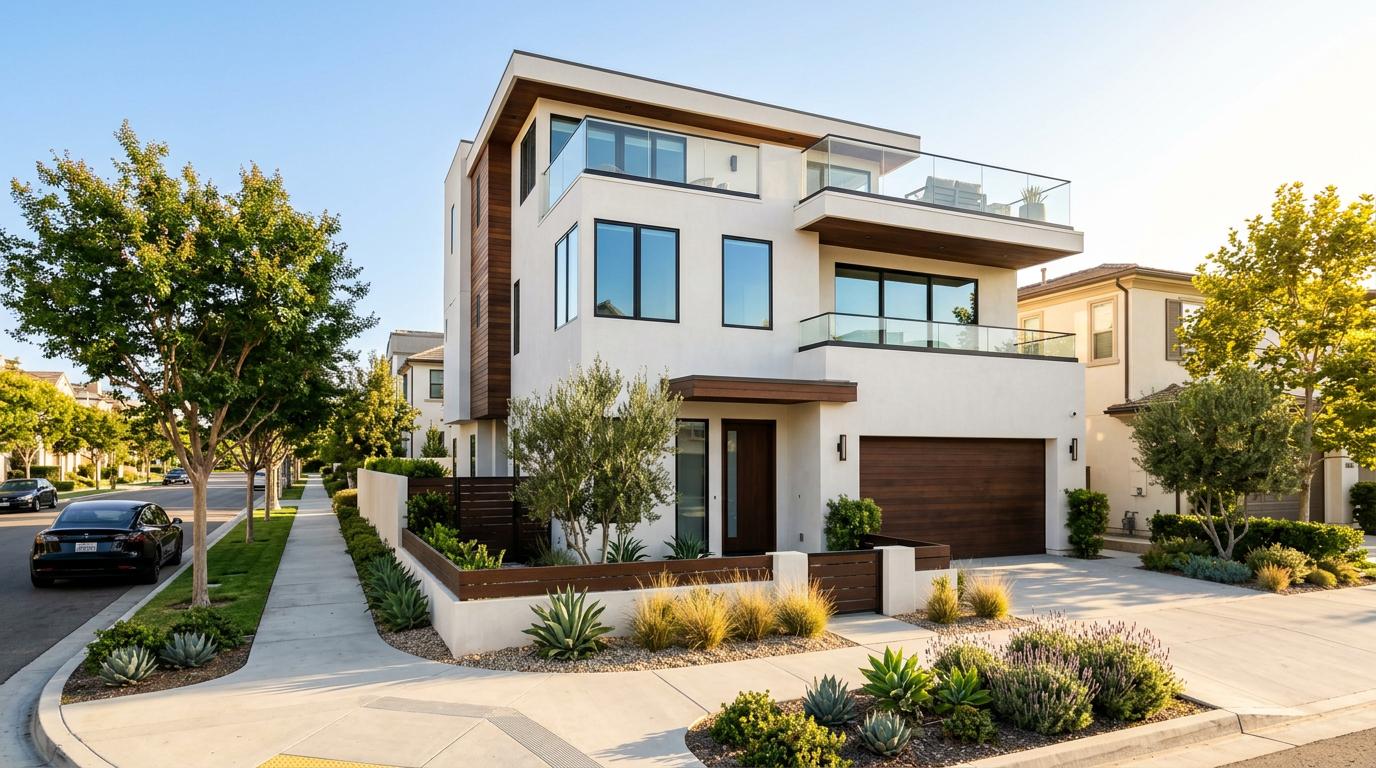
A detached condo is a standalone structure with no shared walls, but it sits on a legally defined condominium lot rather than a traditional single-family lot. These homes often feature zero-lot-line designs, where one side of the house sits directly on the property line, and outdoor space is limited to a small side courtyard or a rooftop deck.
Architecturally, the homes are stunning. Builders have leaned into California Modern, Transitional, and Contemporary designs. Floor plans frequently feature three stories, with the main living area on the second floor and a master suite on the third. Multi-generational living is heavily catered to, with many floor plans offering main-floor bedrooms or attached casitas with separate entrances.
Price bands in the Great Park are strictly premium. In recent months, entry-level, one-bedroom condos and smaller attached townhomes command high prices, while larger detached condos and traditional single-family homes easily push into the $2 million to $3 million+ range.
The Trade-Offs: Mello-Roos and HOAs
Perhaps the most critical financial consideration for any Great Park buyer is the holding costs. The extensive infrastructure, the brand-new schools, and the sprawling parks were not funded by the city's general fund; they were financed through Community Facilities Districts, commonly known as Mello-Roos.
When buying in the Great Park, homeowners assume these special tax assessments, which are added to their annual property tax bill. Depending on the specific neighborhood, the square footage of the home, and the builder phase, the effective property tax rate in the Great Park can range from 1.4% to over 1.8%.
In addition to Mello-Roos, residents pay monthly Homeowners Association (HOA) dues. There is a master HOA that maintains the community centers, pools, and trails across all the Great Park Neighborhoods. If you purchase an attached townhome or a detached condo, you will likely have a second sub-association HOA that covers exterior building maintenance and private motor courts.
Combined, the property taxes, Mello-Roos, and dual HOAs can add thousands of dollars to a homeowner's annual carrying costs. Buyers must work closely with their lender to ensure these specific costs are factored into their debt-to-income ratios and monthly payment comfort levels.
Disclosure
Market information is provided for general education and reflects conditions at the time of writing. It is not legal, tax, or investment advice.
Frequently Asked
What is a detached condo in Great Park Irvine?
A detached condo is a standalone home with no shared walls, but it sits on a condominium lot rather than a traditional single-family lot. In Great Park, these homes typically feature zero-lot-line designs with small side courtyards instead of traditional backyards, and the exterior grounds are often maintained by a sub-HOA.
Are the Great Park schools part of the Irvine Unified School District?
Yes, the schools located within the Great Park Neighborhoods, including Beacon Park K-8, Cadence Park K-8, Solis Park K-8, and Portola High School, are all part of the highly regarded Irvine Unified School District (IUSD). Buyers should always verify their specific address with IUSD to confirm current attendance boundaries.
How high are the Mello-Roos taxes in Great Park?
Mello-Roos taxes in the Great Park are substantial, as they fund the new schools, parks, and infrastructure. Depending on the specific tract and home size, these special assessments can push the total effective property tax rate to between 1.4% and 1.8% or higher.
Do Great Park residents get free access to the Wild Rivers water park or Great Park Ice?
No, regional amenities like Wild Rivers, Great Park Ice, and the FivePoint Arena are public, fee-based facilities separate from the private residential amenities. However, residents do have exclusive, free access to the private neighborhood pools, clubhouses, and parks maintained by their master HOA.
Talk it through
Have a question about your own situation?
Paul Phan represents buyers and sellers across Orange County — in English and Vietnamese.
(714) 717-8088Continue reading
Market
Santa Ana School Choice: Buying Near Downtown's Magnets & Charters
Downtown Santa Ana offers a unique blend of historic architecture and specialized education pathways. For homebuyers, navigating neighborhood boundaries alongside school choice lotteries requires precise timing and local market knowledge.
Market
Huntington Beach Pier and the Downtown Grid: Navigating Orange County's Surfing Landmark
The Huntington Beach Pier is more than a postcard—it is the anchor of a vibrant, high-density residential grid. Here is what buyers need to know about navigating downtown real estate, from coastal permits to parking realities.
Market
The Mile Square Park Perimeter: Buying on Fountain Valley's Green Edge
Fountain Valley's 640-acre centerpiece defines the lifestyle and property values of the neighborhoods surrounding it. For homebuyers, living on the perimeter of Mile Square Park offers unparalleled outdoor access, but requires navigating overlapping school districts and weekend traffic patterns.
