
Market · 8 min read
Living Near Huntington Beach Pier: Real Estate & Neighborhood Guide
| Paul Phan, Realtor®
Downtown Huntington Beach offers an unparalleled coastal lifestyle centered around its historic pier and vibrant Main Street. However, buying real estate in this bustling landmark district requires navigating narrow lots, strict zoning, and the realities of a global tourist destination.
Key Takeaways
- Downtown Huntington Beach real estate is defined by the 'Numbered Streets,' featuring narrow 25x115-foot lots and a mix of historic cottages and modern three-story homes.
- Living near the pier means navigating major events like the US Open of Surfing and the Pacific Airshow, which bring heavy traffic and noise.
- Parking is highly competitive; buyers should prioritize properties with ample off-street parking and understand the city's residential permit program.
- Huntington Beach strictly regulates short-term rentals, making it difficult to use a downtown property as a part-time Airbnb.
- Coastal maintenance is a significant factor, as salt air and marine moisture accelerate wear on exterior paint, metals, and HVAC systems.
- Commuting to the 405 Freeway from downtown takes 15-25 minutes via surface streets like Beach Boulevard.
The Heartbeat of Surf City USA
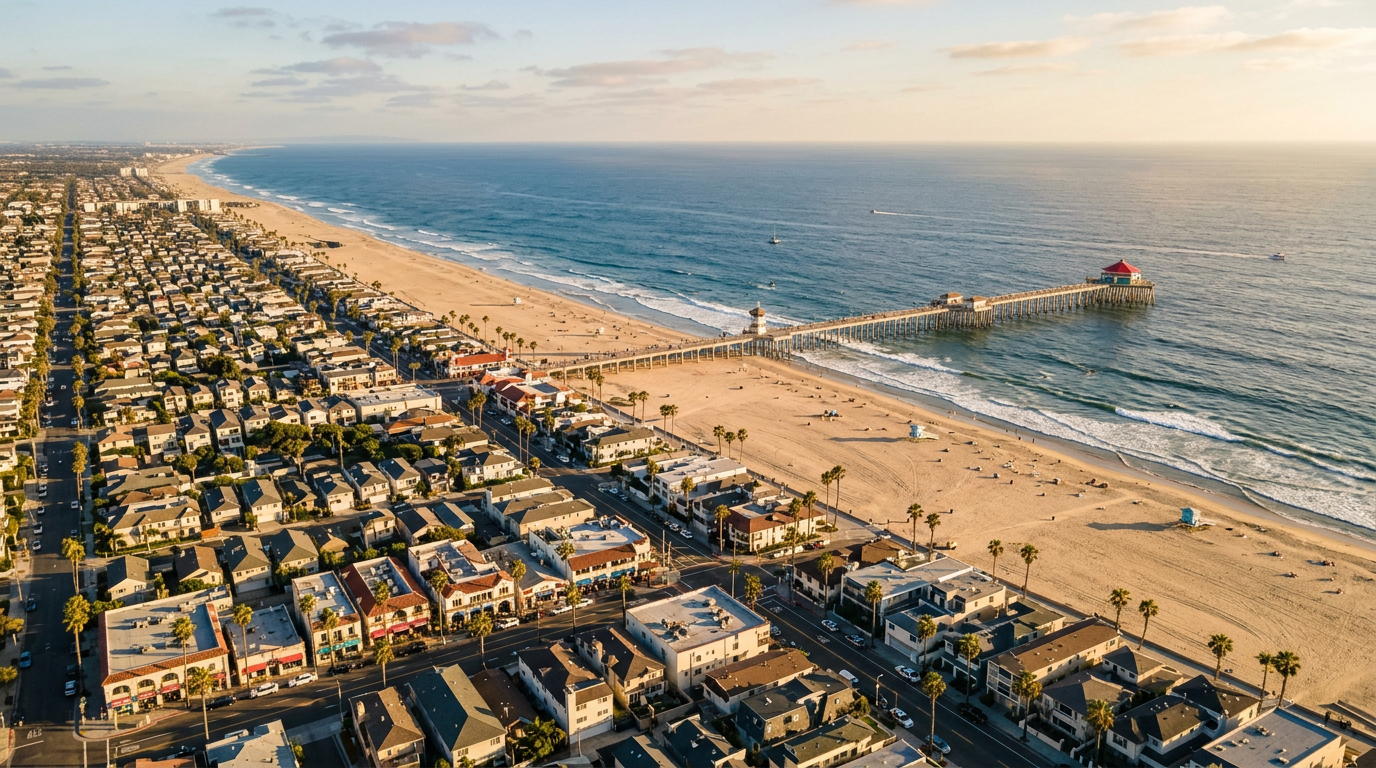
Stretching 1,850 feet into the Pacific Ocean, the Huntington Beach Pier is more than just a scenic landmark; it is the cultural and economic epicenter of Surf City USA. For buyers looking to purchase real estate in coastal Orange County, the neighborhoods immediately surrounding the pier and downtown Main Street offer a highly specific, highly coveted lifestyle.
Living in downtown Huntington Beach means waking up to the marine layer, walking to local coffee shops on Main Street, and having immediate access to miles of uninterrupted coastline. It is a neighborhood defined by its relationship to the water and the vibrant, sometimes chaotic, energy of a world-renowned surf destination.
However, purchasing a home in the shadow of an international landmark comes with unique trade-offs. The very things that make downtown Huntington Beach desirable—the walkability, the events, the beach access—also bring heavy summer traffic, parking scarcity, and strict municipal regulations. For buyers, understanding the nuances of the "Numbered Streets" and the realities of coastal maintenance is essential before making a multi-million-dollar commitment.
The Numbered Streets: Downtown Huntington Beach Real Estate
The residential grid radiating outward from Main Street is affectionately known by locals as the "Numbered Streets." Running perpendicular to the Pacific Coast Highway (PCH), these streets begin at 1st Street near the city's southern downtown border and extend northward into the 20s. Intersecting them are the "Tree Streets"—Walnut, Olive, Orange, and Pecan avenues—which run parallel to the ocean.
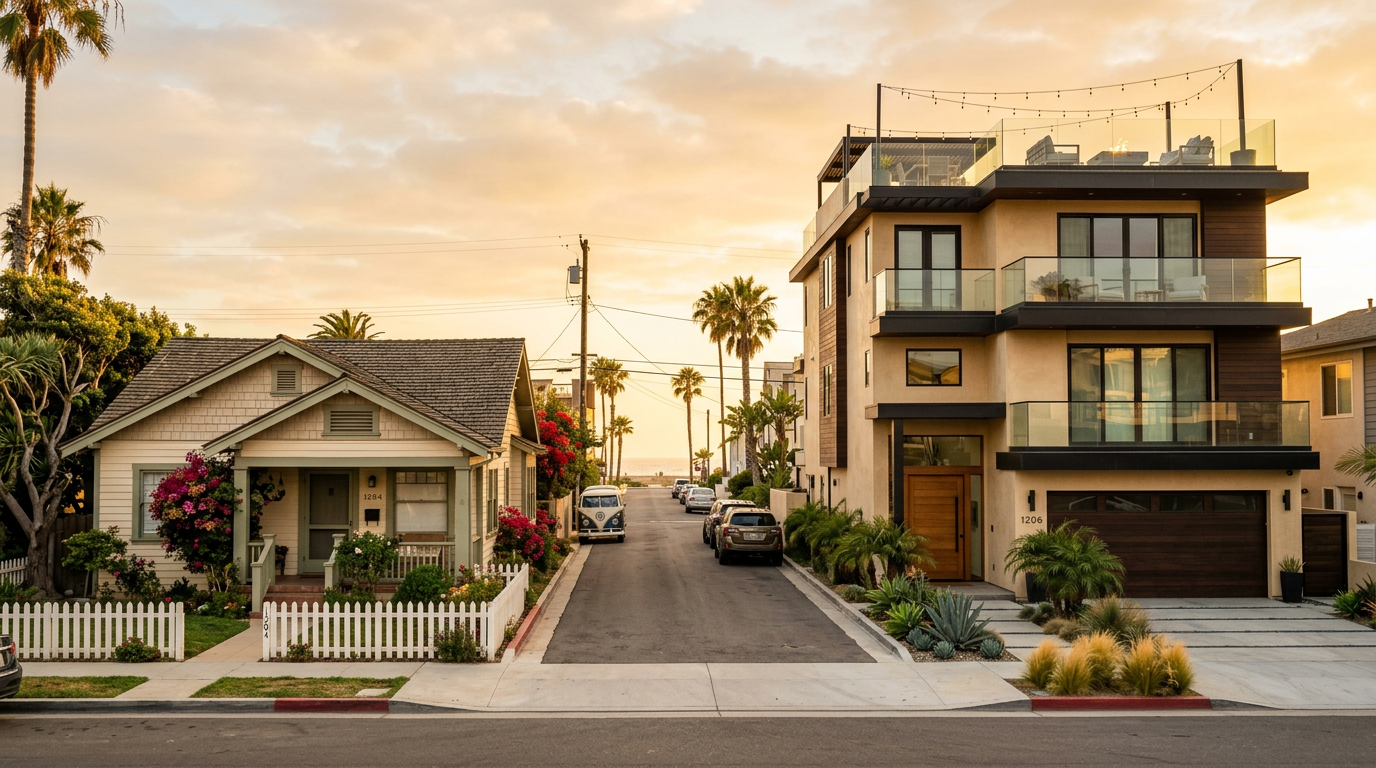
The defining characteristic of real estate in the Numbered Streets is the lot size. The vast majority of these parcels are standard 25-foot by 115-foot lots. This narrow footprint dictates the architectural style of the neighborhood. To maximize square footage, most modern homes are built vertically, resulting in three-story properties that often feature rooftop decks to capture ocean views.
Architecturally, the area is a fascinating patchwork. You will find original 1920s and 1930s beach cottages sitting shoulder-to-shoulder with towering, newly constructed contemporary coastal estates, Mediterranean revivals, and modern farmhouses.
In recent months, entry-level properties in the downtown area—often older, unrenovated cottages or teardowns on standard lots—command premium pricing simply for the dirt they sit on. As you move closer to the sand, particularly west of Olive Avenue or on the highly coveted Pacific Coast Highway frontages, custom-built luxury homes regularly trade in the upper multi-million-dollar tiers.
Condos, Townhomes, and High-Density Coastal Living
For buyers who want the downtown lifestyle without the maintenance of a detached custom home, the area offers a variety of condominiums and townhomes. Complexes like Pierhouse, located just steps from the sand, offer resort-style amenities including pools, secure subterranean parking, and immediate beach access.
Townhomes are also scattered throughout the Numbered Streets, often built as two units on a double lot. These properties provide a middle ground, offering more square footage than a traditional condo while sharing a wall and an HOA with only one or two neighbors.
When evaluating attached homes in downtown Huntington Beach, buyers must pay close attention to the Homeowners Association (HOA). Coastal HOAs are notoriously expensive due to the accelerated wear and tear caused by the marine environment. Master insurance policies, exterior paint, and roof maintenance cost significantly more when exposed to constant salt air. Buyers should always have their Realtor® review the HOA's reserve study to ensure the community has adequate funds for upcoming coastal maintenance projects.
The Reality of Living Near a Global Tourist Destination
Living near the Huntington Beach Pier means sharing your neighborhood with millions of visitors a year. The pier and Main Street host massive annual events that completely transform the local landscape.
The US Open of Surfing, typically held in late summer, draws hundreds of thousands of spectators over a nine-day period. The Pacific Airshow in October turns the beach into a massive viewing area for fighter jets, creating thrilling but deafening noise levels. Add in the 4th of July parade—the largest west of the Mississippi—and weekend surf competitions, and buyers must be prepared for regular road closures and heavy foot traffic.
Parking is perhaps the most significant daily reality for downtown residents. While most homes have garages, street parking is highly contested. The City of Huntington Beach operates a residential parking permit program for the downtown area, which exempts residents from certain time-limit restrictions. However, a permit does not guarantee a spot in front of your house. Buyers looking at homes on the Numbered Streets must prioritize properties with adequate off-street parking, especially if they plan to host guests or have multiple vehicles.
Short-Term Rentals and Coastal Commission Zoning
A common misconception among buyers is that they can purchase a home near the Huntington Beach Pier and offset the mortgage by renting it out on platforms like Airbnb or VRBO when they are not using it.
Huntington Beach has very strict regulations regarding short-term rentals (STRs). Currently, unhosted short-term rentals (where the owner is not present) are largely prohibited in residential zones, and the city actively enforces these bans with steep fines.
Furthermore, any development or major renovation west of the Pacific Coast Highway—and in many areas just east of it—falls under the jurisdiction of the California Coastal Commission. Navigating building permits in the Coastal Zone requires additional time, expense, and regulatory hurdles. Adding an Accessory Dwelling Unit (ADU) is possible under California state law, but doing so on a narrow 25-foot lot while adhering to coastal overlay zones and local parking requirements requires an experienced local architect and contractor.
Salt Air, Ocean Breezes, and Coastal Maintenance
The physical toll of the ocean environment on real estate cannot be overstated. Homes located within walking distance of the Huntington Beach Pier are subjected to constant salt spray, morning fog, and damp marine air.
Buyers must factor higher maintenance costs into their long-term budgets. Exterior paint degrades much faster than it does inland. Unprotected metals will rust rapidly; stainless steel, copper, and specialized marine-grade materials are absolute necessities for exterior fixtures, gates, and hardware. Window seals frequently fail due to the moisture, and HVAC systems (specifically exterior condenser units) have significantly shorter lifespans unless treated with anti-corrosive coatings.
When touring homes in downtown Huntington Beach, look closely at the hinges on exterior doors, the tracks of sliding glass doors, and the condition of balcony railings. These small details often reveal how well a property has been maintained against the elements.
Walkability, Dining, and Daily Life on Main Street
Despite the traffic and maintenance, the lifestyle in downtown Huntington Beach is uniquely rewarding. It is one of the most walkable neighborhoods in Orange County.
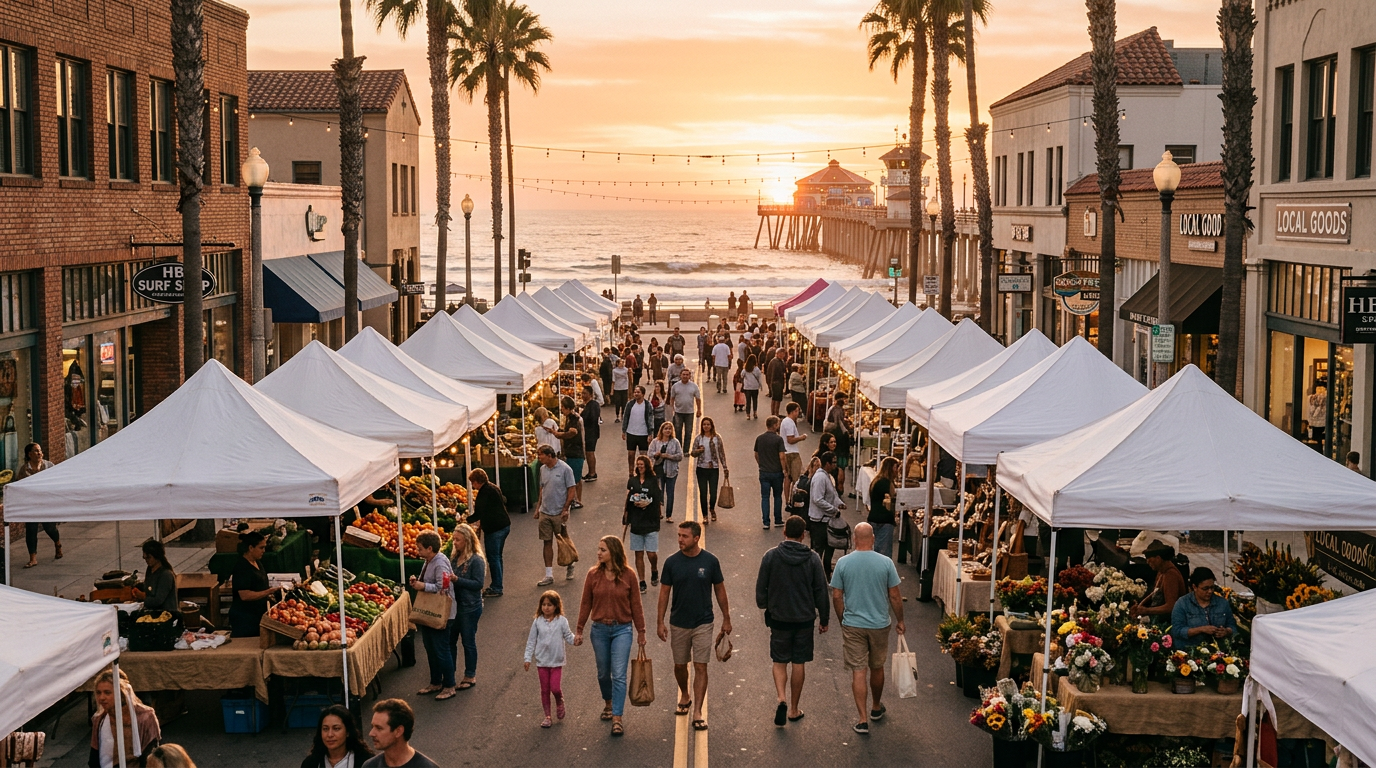
Residents can easily walk or bike to Main Street for morning coffee, boutique shopping, or dining at local staples. Every Tuesday evening, Main Street shuts down to vehicular traffic for "Surf City Nights," a massive farmer's market and street fair featuring local produce, artisan goods, and live music. It serves as a weekly gathering spot for the community.
Just north of the pier along PCH sits the famous Huntington Dog Beach, a major draw for pet owners. The paved oceanfront path, stretching for miles in either direction, is a daily thoroughfare for cyclists, joggers, and roller skaters. For those who prioritize an active, outdoor lifestyle, the access provided by a downtown address is unmatched.
Commuting and Connectivity from the Coast
While downtown Huntington Beach feels like a self-contained coastal village, residents still need to commute to other parts of Orange County or Los Angeles. The primary arteries out of the downtown area are Beach Boulevard (State Route 39), which runs north-south, and the Pacific Coast Highway, which connects to Newport Beach to the south and Seal Beach to the north.
Reaching the 405 Freeway from the pier area typically takes 15 to 25 minutes depending on traffic, as drivers must navigate several miles of surface streets through the city. Buyers commuting daily to Irvine or Los Angeles must factor this "surface street penalty" into their morning routines. However, for those who work remotely or locally, the isolation from the freeway system is often viewed as a benefit, keeping the neighborhood insulated from the broader urban sprawl of Southern California.
Is Downtown Huntington Beach Right for You?
Purchasing a home near the Huntington Beach Pier is a lifestyle choice as much as it is a financial investment. It requires a willingness to embrace the energy of a tourist destination, the quirks of narrow-lot living, and the ongoing maintenance demanded by the Pacific Ocean. For those who crave walkability, surf culture, and immediate access to the sand, there is simply nowhere else like it in Orange County.
Navigating the nuances of downtown Huntington Beach real estate requires deep local expertise. From understanding the structural integrity of a 1930s beach cottage to interpreting the latest coastal zoning regulations, having a knowledgeable advocate is crucial.
Paul Phan and The Maison by Phan Group specialize in Orange County's coastal markets. If you are considering buying or selling a home near the Huntington Beach Pier, contact Paul Phan, Realtor®, at (714) 717-8088 or paul@maisonbyphan.com to discuss your real estate goals.
Disclosure
Market information is provided for general education and reflects conditions at the time of writing. It is not legal, tax, or investment advice.
Frequently Asked
Can I Airbnb my home in downtown Huntington Beach?
Currently, the City of Huntington Beach strictly prohibits unhosted short-term rentals in most residential zones. Buyers looking to purchase a property for Airbnb use must carefully verify zoning regulations with the city, as illegal operations face heavy fines.
What is the typical lot size in the Numbered Streets?
The standard lot size in downtown Huntington Beach's Numbered Streets is 25 feet wide by 115 feet deep. Because of this narrow footprint, many newer homes are built up to three stories tall to maximize living space.
Do residents get special parking privileges near the pier?
The city offers a residential parking permit program for certain downtown zones, which exempts residents from posted time limits. However, a permit does not guarantee a parking spot, making off-street garage parking highly valuable.
How does the Coastal Commission affect home renovations?
Properties located west of the Pacific Coast Highway, and some immediately east, fall within the California Coastal Zone. Major renovations or new construction in this zone often require additional permits and oversight from the Coastal Commission, which can extend project timelines.
Talk it through
Have a question about your own situation?
Paul Phan represents buyers and sellers across Orange County — in English and Vietnamese.
(714) 717-8088Continue reading
Market
Living Near Mile Square Park: Fountain Valley Real Estate Guide
Mile Square Park is the 604-acre green heart of Fountain Valley, anchoring property values and defining the local lifestyle. For homebuyers, living near this regional landmark offers unmatched recreational access, but requires navigating specific traffic, boundary, and housing considerations.
Market
Irvine Unified vs. Tustin Unified: Navigating the Real Estate Boundary
In central Orange County, a home's city address doesn't always dictate its school district. Understanding the boundary between Irvine Unified and Tustin Unified is crucial for buyers navigating neighborhood premiums, Mello-Roos taxes, and daily commutes.
Market
Huntington Beach High Schools & Coastal Neighborhoods Guide
For families moving to Surf City, choosing the right neighborhood often comes down to high school boundaries and lifestyle preferences. Explore the realities of living near Huntington Beach's top campuses.
